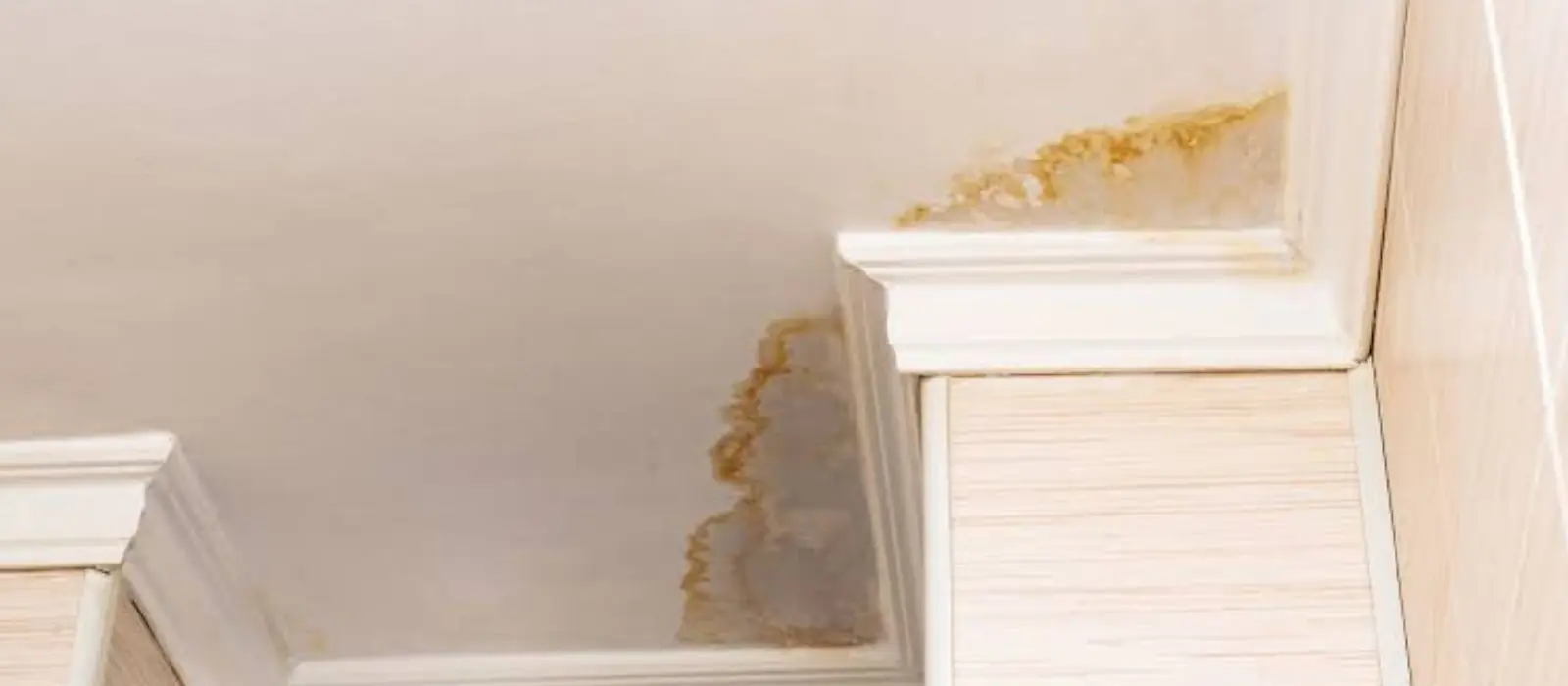
Restoration is about the cavity, not the stain
A stain is the visible tip of a wider wet zone. Water entering from the roof or an upstairs pipe soaks insulation, wets the tops of ceiling boards, and runs along joists to places no one can see from below. Restoration treats that whole path, from the room to the roof deck, and that is the difference between restoration and a surface repair.
The goal is simple to state. Remove what cannot be saved, dry what can, check that dry is real, and only then rebuild.
How the work usually runs, from first call to rebuild
Assess and map moisture
A moisture meter and, in many cases, a thermal camera show how far the water traveled. Readings are recorded so drying progress can be compared against the first day.
Contain and protect
Plastic sheeting and tape separate the work area from the rest of the home, and floors and furniture get covered. If mold is possible, containment is more serious, with air control to keep dust in the work zone.
Open the ceiling and remove wet material
Wet board, plaster and insulation are cut out back to dry, solid framing. Openings are sized to let air reach the cavity.
Dry with airflow and dehumidification
Air movers and dehumidifiers pull water out of framing and the remaining ceiling, and the attic is treated if it is part of the wet path.
Verify, then hand off to the rebuild
Final readings are compared with a dry reference before the ceiling is closed, insulated and finished.
Insulation and the attic: what stays and what goes
The attic holds the clearest evidence of where water came from, so a good assessment goes up there. Look at the roof sheathing, the wiring, the bath fan duct and any wet insulation. Dark stains on the wood suggest repeated wetting, while fresh, wet-looking wood points to a recent event.
Insulation decisions depend on the material and the water. Clean water that wets fiberglass for a short time may allow it to be dried, while compacted or soaked insulation and anything wetted by contaminated water is usually removed.
| Material | What wetting does | Usual decision |
|---|---|---|
| Fiberglass batts | Hold water, mat down, lose R value if compressed | Dried in place if lightly wetted and clean, removed if soaked or contaminated |
| Blown cellulose | Soaks up water and stays wet a long time | Usually removed from the wet area |
| Spray foam | Closed cell resists water, open cell can absorb it | Assessed case by case, with moisture checked in the wood behind it |
| Drywall ceiling | Paper softens, board sags | Cut out where soft or stained through |
| Plaster on lath | Keys can loosen, lath stays damp | Often dried and re-secured if still bonded, otherwise removed |
| Roof sheathing and joists | Dry slowly, may darken | Dried and rechecked, replaced only if damaged |
Moisture readings: how anyone knows it is dry
You cannot judge dryness by touch. A crew uses a moisture meter on wood and drywall, sometimes a thermal camera to find cool damp areas, and a hygrometer to track the humidity of the air. Each reading is taken at marked locations, so day-two numbers can be compared with day-one numbers.
The target is a reading that matches a dry sample of the same material in the same house. Ask the company whether its crews work to ANSI/IICRC S500, the published industry standard for water damage restoration, and ask to see the final readings.
When mold is possible, containment comes first
Mold needs moisture, and a wet cavity that stays damp gives it time. The Massachusetts DPH homeowner guide says the Housing Code requires areas to be dried after leaks and floods within 48 hours and recommends aiming for 24. If drying ran past that or you see dark spotting, the plan should include containment before anyone disturbs the material.
Remediation follows practice described in ANSI/IICRC S520, and the same DPH guide notes that Massachusetts does not require a license for mold remediation. That makes the questions you ask a company more important. Health concerns about mold belong with a physician, not with a restoration crew.
Safety note: do not disturb suspected mold yourself
Sanding, scrubbing or tearing out discolored ceiling material can put dust into the air of the whole house. Close the room, turn off any fan that circulates air through it, and call the dispatch line. If wiring is wet or a ceiling is sagging, stay out of the room.
What not to do with a wet ceiling
- Do not stand under a bulging or sagging section of ceiling, because wet plaster and drywall can let go all at once.
- Do not poke the bulge with your hand or a tool unless you have a bucket under it and are standing clear of the opening.
- Do not switch on light fixtures that sit in or near the wet section until the wiring has been checked dry.
- Do not paint over a stain before the cavity above has been dried, because the stain will bleed back through.
Want the cavity checked, not just the surface?
Call the dispatch line to describe the ceiling and the attic above it. Licensed and insured restoration professionals can take readings and explain the scope and price before work starts.
Marblehead note: why restoring to a proper standard matters here
Census QuickFacts lists Marblehead's owner-occupied housing rate at 85.2 percent and the median value of owner-occupied homes at $943,900 for 2020 to 2024. Most households here own the structure and carry the cost of anything left behind a ceiling.
A cosmetic patch over wet insulation is the kind of thing that can resurface later as a stain or mold, and with homes at those values, a documented, dried and verified repair is the sensible standard. This is not legal or financial advice, so ask a professional about your own situation.
The town's 2023 Hazard Mitigation Plan lists two federal declarations that apply to Marblehead, the coastal storm of March 3 to 6, 2018 and severe weather and flooding on September 12 to 16, 2023. Storms with wind driven rain test roofs and flashing, so after a major storm look at your top floor ceilings and the attic, not only the basement.
Sources: U.S. Census Bureau QuickFacts, census.gov. Town of Marblehead Hazard Mitigation Plan (October 2023), marblehead.org
Questions to ask before the crew starts
- Will you take moisture readings in the ceiling, framing and attic, and show me the results?
- Do your crews work to ANSI/IICRC S500, and S520 if mold is involved?
- What will you remove, and what will you try to dry in place?
- How will you contain dust, and what happens if the material turns out to be contaminated?
- Are you licensed and insured, and who handles the rebuild after drying?
Insurance is a separate conversation. Sudden and accidental water damage is often covered by homeowners policies, gradual leaks often are not, and flood damage usually needs separate flood coverage, so check your policy and ask your insurer. When ceiling water damage is part of a larger loss, water damage cleanup and mold remediation are the services most often involved. Dispatch also covers Salem and Beverly.
Frequently Asked Questions
Does ceiling water damage restoration always mean tearing out the ceiling?
No. A brief wetting from clean water may allow a ceiling to be dried in place, while soft, sagging or stained-through material is removed. Readings from a moisture meter decide.
Even when the ceiling stays, the insulation or framing above may still need attention.
Why do crews open the ceiling instead of drying from the room?
Air in the room cannot dry a closed cavity quickly. An opening lets airflow reach the wet insulation, board and framing, and lets the crew see what is happening.
Smaller openings can sometimes be used when the damage is limited.
What readings should I ask for?
Ask for the starting readings, the daily readings and the final readings at the same marked spots, plus a reading from a dry part of the house for comparison.
A company that follows ANSI/IICRC S500 will be familiar with documenting drying.
Should mold be suspected after a ceiling leak?
It depends on how long the materials stayed wet and whether you see dark spotting or smell mustiness. Mold needs moisture, so a quickly dried leak is less likely to cause trouble than a long, slow one.
If you suspect it, avoid disturbing the area and have it assessed. Health concerns belong with a physician.
Is a recent Marblehead storm a reason to check the ceilings?
Storm events with wind driven rain can test roof flashing and vents, and the town's hazard plan lists the 2018 coastal storm and the 2023 severe weather and flooding as declared events. After a major storm, look for new rings, damp attic insulation or drips.
Catching a leak early keeps the drying job smaller.
How is restoration different from a repair?
Restoration deals with the water, the wet materials and the dryness check. Repair rebuilds the finish with patch, prime and paint.
Doing the second without the first is how stains come back.