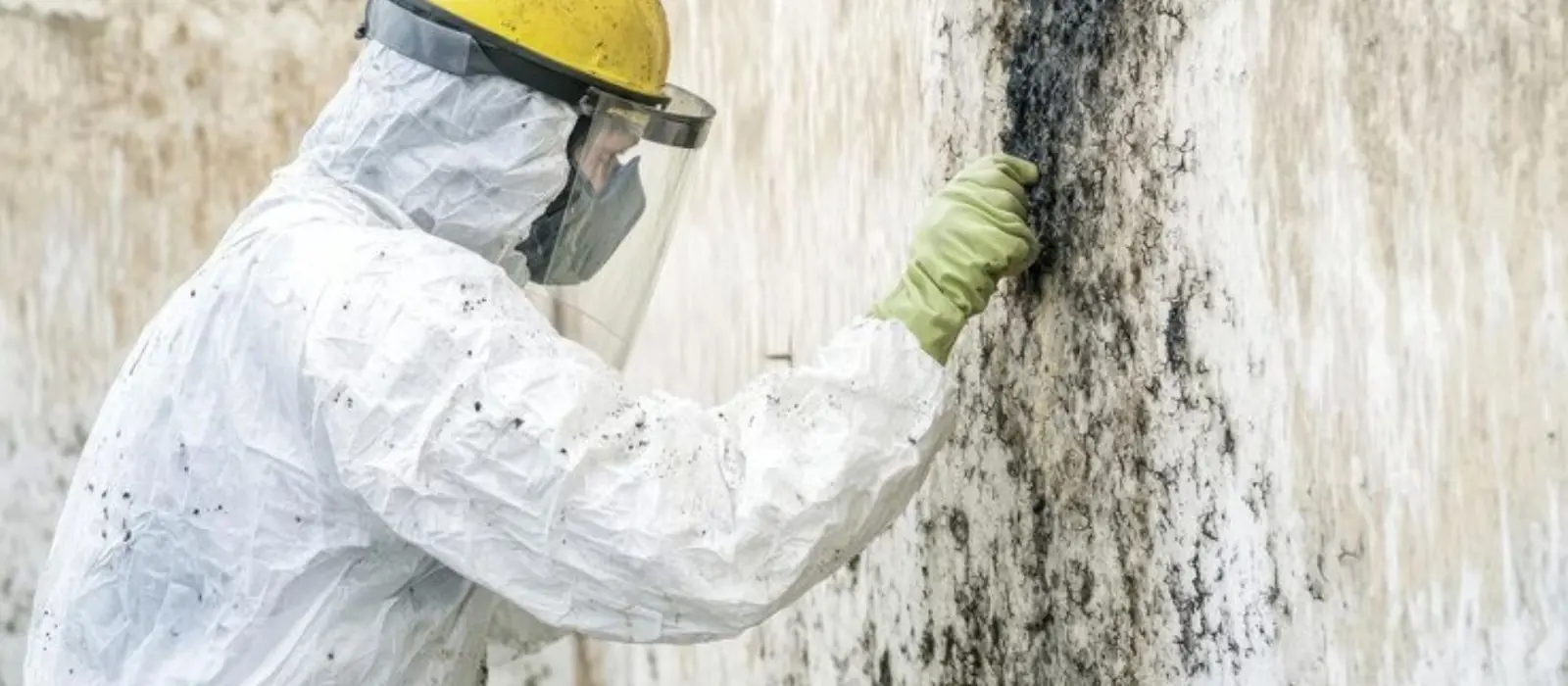
Mold calls usually start small: a spot on a closet wall, a stale smell in the basement, a ceiling stain that returned after painting. Mold remediation is the work of finding the moisture behind it, containing the area, removing contaminated material and cleaning what stays.
It is a scheduled-assessment service rather than an emergency, though a leak still feeding the problem should be stopped the same day. The dispatch line answers 24/7, and same-day response is available when crews are free.
A musty smell, spots in a closet corner or a stain on the bathroom ceiling?
A stale smell in the basement, dark spots in the corner of a closet and a stain above the shower all say the same thing: some material stayed wet long enough for something to grow on it. Whether it turns out to be mold, mildew or old water staining, the next step is identical.
That step is mold remediation done properly, which begins with finding the moisture and having a crew assess what is affected before anything is scrubbed or painted over.
Fix the moisture source first
Mold needs moisture to grow, so cleaning a wall that a pipe is still wetting is wasted effort. The leak, the condensation or the roof failure gets repaired first, usually by a plumber, HVAC technician or roofer. The Massachusetts DPH homeowner mold guide makes the same point: cleanup and repairs go together with controlling excess moisture.
The crew then maps moisture with a meter so removal covers the wet area and not just the visible spots. Hidden growth often sits behind the stain in the wall cavity or under the carpet pad. If the leak is still active, our water mitigation team can dry the structure while the repair is scheduled.
Mold removal and black mold cleanup
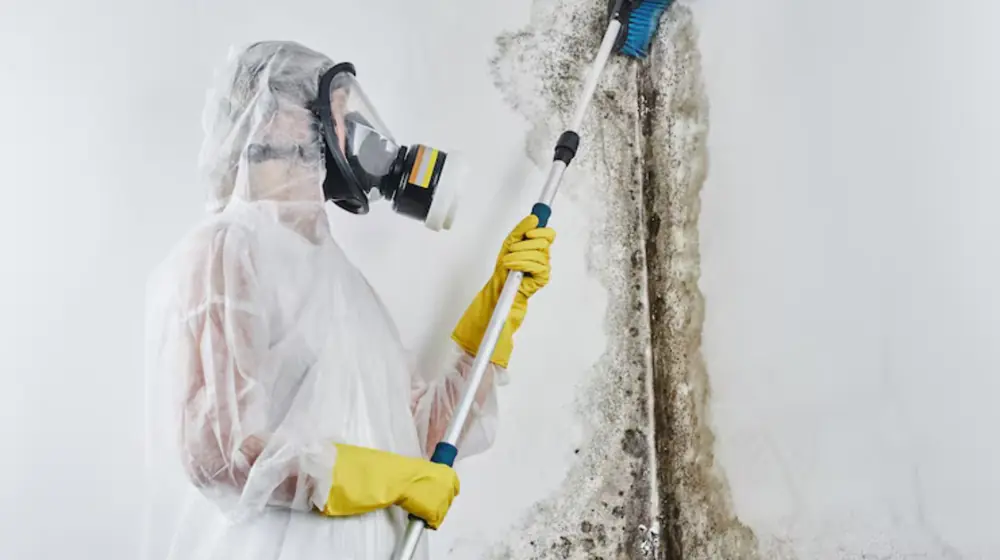
Removal begins with containment: plastic sheeting seals the work area, and an air filtration device with a HEPA filter keeps dust from reaching the rest of the house. Porous materials that mold has grown into, such as drywall, insulation, carpet and pad, are cut out and double-bagged. Structural wood is cleaned with HEPA vacuuming and damp wiping, and sanded or abrasive-cleaned where growth is embedded.
Black mold is a color, not a diagnosis. Many molds look dark, and a lab or an assessor identifies a sample, not a glance at the wall. The approach is the same for any visible growth: contain, remove, clean and dry. We make no health claims, and questions about symptoms belong to a physician.
Afterward the area is HEPA vacuumed and wiped again, and the crew checks with a moisture meter that framing and slab are dry before anything is rebuilt. Closing up wet framing only restarts the problem. Surrounding rooms are covered, and removed materials leave the house in sealed bags so spores are not tracked through living space.
Mold after water damage
Mold often follows a water loss that was not dried in time. The Massachusetts DPH homeowner mold guide says the Housing Code requires areas to be dried from leaks and floods within 48 hours, which is a useful benchmark when you are deciding how urgent a wet area is. Fast drying through water mitigation lowers the odds that mold gets a start, though it does not guarantee any outcome.
Pad, drywall and insulation that stayed wet past that window are the usual suspects when a stain or smell appears later.
If the water event was weeks ago and nothing dried properly, expect hidden growth in wall cavities, under carpet pad and behind baseboards. The crew opens selected areas to learn the extent, then removes affected material under containment. Sewage or floodwater involvement adds a cleanup layer, covered under flood damage restoration, and water damage cleanup handles debris and sanitizing before mold work starts.
Mold testing and independent clearance
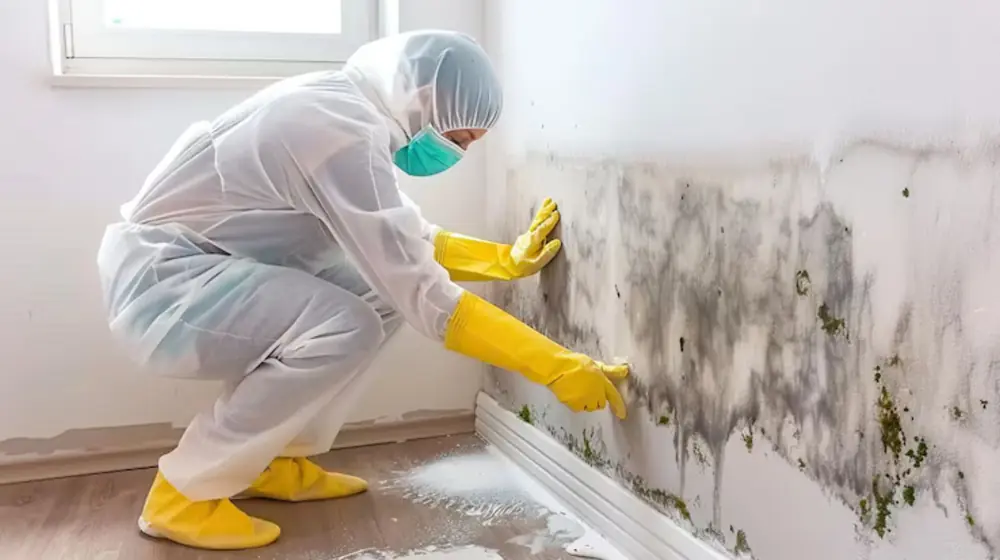
Assessment and testing are different things. An assessment looks at moisture readings, building history and visible growth, while testing sends air or surface samples to a lab. A lab result describes one sample at one moment, so it is a data point and not a promise about the rest of the house.
Independent clearance means a third-party assessor, who is not the company that did the removal, checks that the work area is clean and dry afterward. That separation avoids a company grading its own work. Clearance usually involves a visual inspection, moisture readings and sometimes samples compared with outdoor or unaffected areas.
Clearance often matters in a home sale or loan. A buyer's lender or inspector may ask for documentation that mold was dealt with before closing, and the lender decides what it accepts. Ask the lender or buyer what paperwork they require before scheduling work, and know that no company can promise a particular test result or lender decision.
What to do before help arrives on a mold job
- Stay out of any room with a strong musty smell if you are dealing with a large area, and keep children and pets out of it.
- Do not scrub, sand or brush moldy surfaces or run a fan across them, because that spreads spores into clean rooms.
- Fix or shut off the water source first, since mold keeps growing as long as the material stays wet.
- Photograph the affected areas and note where the moisture came from, so the crew and your insurer see the same picture.
- Ask a physician about any health concern, because health questions are outside what a remediation crew can answer.
Spots, smell or a stained ceiling?
Call the dispatch line and describe what you see. An assessment is arranged first, and scope and price are explained before work starts.
Common mold situations in Massachusetts homes
Leak under a bathroom sink
Cabinet floors and back panels soak up slow drips. The leak is fixed, wet particleboard is removed and the cabinet area is cleaned.
Upstairs toilet leak
A leak from above can stain and soak the finished basement ceiling below. Drywall under the stain is cut out, framing is checked and cleaned, and the supply is repaired.
AC condensate line in a closet
A clogged condensate line can drip into a closet wall and floor. The line is cleared or repaired, wet carpet and drywall are removed and the cavity is dried.
Soffit and attic
Poor ventilation and roof leaks wet sheathing and soffit baffles. The cause is corrected, and affected sheathing and insulation are cleaned or replaced.
Bird droppings and remodel gutting
Droppings in an attic or soffit and mold exposed during demolition both call for containment, protective gear and bagged waste before rebuilding.
Carpet pulled back to mold
Growth under pad and carpet edge points to chronic moisture. The area is removed and the source tracked down.
Mold situation and usual approach
| Situation | Usual approach | What decides the scope |
|---|---|---|
| Spots on a painted wall | Moisture check, then clean or remove the affected board | Whether the wall is still wet behind the paint |
| Bathroom ceiling stain | Find the source, open the ceiling, remove wet drywall and insulation | Source above and size of the stain |
| Closet corner under a leak | Dry the cavity, remove wet drywall and carpet, clean framing | How long the leak ran |
| Musty odor in a basement | Locate the moisture, then remove or clean what holds it | Whether the odor source is stored items or structure |
| Attic sheathing or soffit | Correct the ventilation or roof leak, clean or replace affected wood | Roof access and amount of insulation |
| Post-remodel growth in open walls | Containment, remove contaminated material, then clearance | Whether framing is dry |
Ask whether crews work to S520
ANSI/IICRC S520 is the published standard for professional mold remediation, and you can ask any company whether its crews work to it. The Massachusetts DPH homeowner mold guide states there are no licenses required to conduct mold remediation in Massachusetts, so the questions you ask are your protection. Ask which standard the crew follows, how the work area is contained and what is in the written scope.
Ask about clearance, too: who performs it and what happens if the work area fails. Our network dispatches licensed and insured restoration professionals. Crews serve Swampscott, Salem, Lynn, Peabody and Beverly as well as Marblehead.
Cost factors
Extent of growth
A closet corner and a whole basement ceiling are different jobs.
Materials affected
Porous materials are removed and replaced, while framing is cleaned.
Containment and access
Attics, crawl spaces and finished rooms change setup time.
Moisture source repair
Plumbing, HVAC or roof repairs are separate trades from remediation.
Testing and clearance
Third-party assessment and lab fees are separate from removal.
Scope and price are explained before work starts. Water damage that is sudden and accidental is often covered and mold from gradual leaks often is not, so check your policy and ask your insurer. What you will actually pay turns on your property and the damage in it, so call the dispatch line.
Frequently Asked Questions
I smell something musty but cannot see any mold. What could it be?
A musty odor usually points to a material that is staying damp, such as a wall cavity, carpet pad or stored items in a basement. It may or may not be mold, and the smell alone does not say.
An assessment checks moisture readings and opens suspect areas to find the source. Fix the moisture first.
Can I clean mold myself?
The Massachusetts DPH publishes a step-by-step homeowner guide on mold cleanup and moisture control. Small surface spots on hard surfaces may be a homeowner task, while growth in drywall, insulation or carpet, or wet areas you cannot find, usually calls for professionals.
Do I need mold testing before removal?
Not always. Visible growth can be removed without a lab, and testing is more useful for clearance afterward or when a buyer, lender or condo board asks for documentation. An assessor can advise on your situation.
Is black mold different from other mold?
Color does not identify a mold. Treatment is the same for visible growth, namely fixing the moisture, containment, removal and cleaning. Health questions belong to a physician.
My buyer's lender wants the mold removed before the loan closes. What do I need?
Ask the lender what documentation it requires, then arrange remediation and an independent clearance assessment. No company can promise what a lender or buyer will accept.
Will the mold come back after remediation?
No one can promise that. Mold needs moisture, so the outcome depends on the leak or condensation being fixed and the area staying dry.
Does insurance cover mold remediation?
It depends on the cause. Mold following sudden and accidental water damage may be covered in part, while mold from gradual leaks often is not. Read your policy and ask your insurer.
How much notice do you need for a mold assessment?
Call the dispatch line and it is scheduled. Same-day response is available when crews are free.