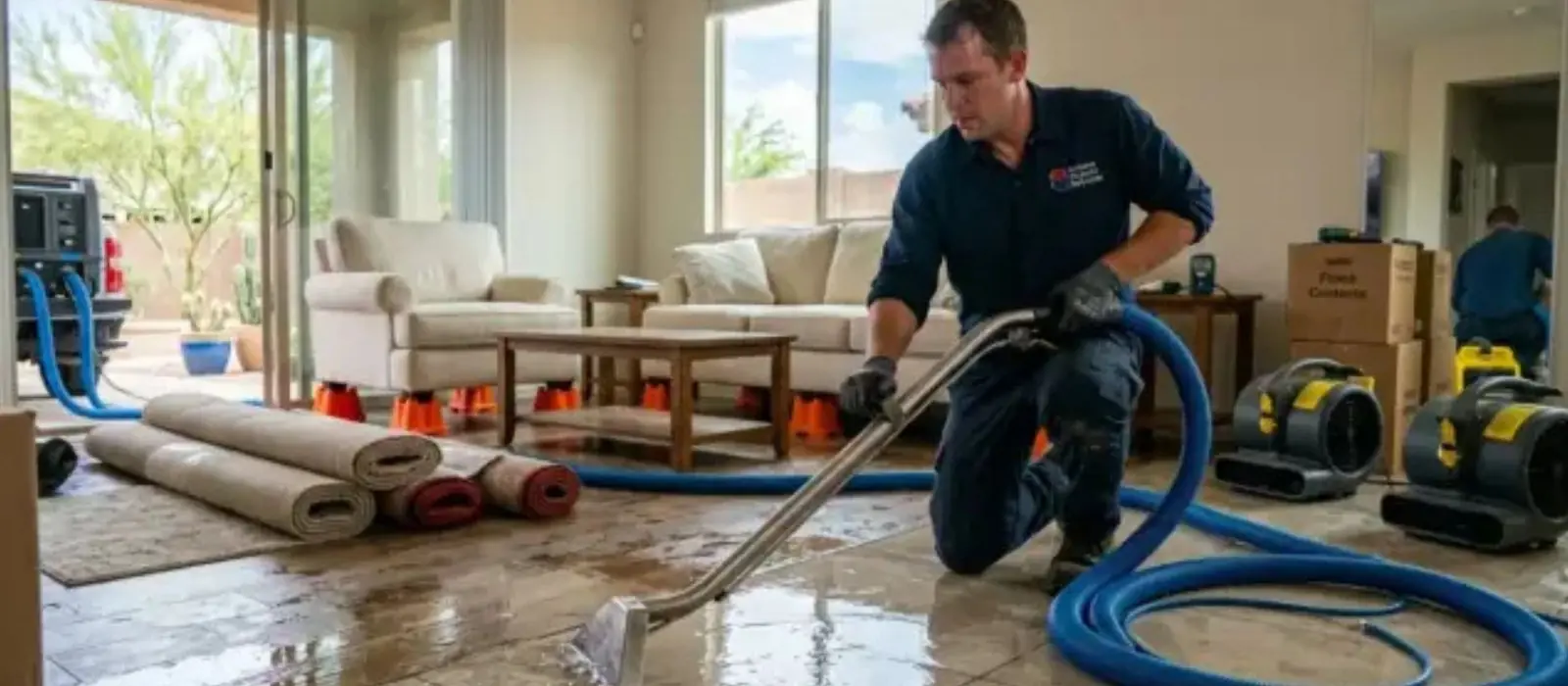
Standing water in your home or basement right now
A flooded floor is an emergency, and the dispatch line takes calls 24/7. Each hour the water sits, it travels further into carpet pad, baseboards and wall bottoms. Stop the source if you can do it safely, then read the box below before you step into the room.
Electrical and sewage come first
Do not wade into water if outlets, power strips, appliances or the panel could be touching it. Cut power to the wet area only if the panel is dry and reachable without standing in water. If you hear sparking or buzzing, or smell gas, leave the house and call 911 or the utility before you call anyone else.
Water from a toilet, floor drain or sewer line is contaminated. Keep people and pets out, do not run a household vacuum on it, and do not try to mop it up barehanded.
- Close the fixture shut-off or the main water valve to stop new water.
- Lift furniture legs, rugs, electronics and boxes off the floor.
- Open interior doors to see how far the water has spread, but leave wet areas to the crew.
- Take photos from the doorway before anything moves.
How standing water is removed
Assess the water
The crew identifies the source, estimates depth and checks whether the water is clean, gray or contaminated. That decides the equipment and the protective gear.
Pump the bulk
Submersible pumps move deep water out through hoses to a safe discharge point. Where the water goes matters, as the sump pump note below explains.
Extract the remainder
Wet vacuums and extraction wands pull water out of carpet, pad and low spots that pumps cannot reach.
Hand off to drying
Extraction removes liquid, not moisture held in wood and drywall. Moisture mapping and drying equipment follow under water mitigation.
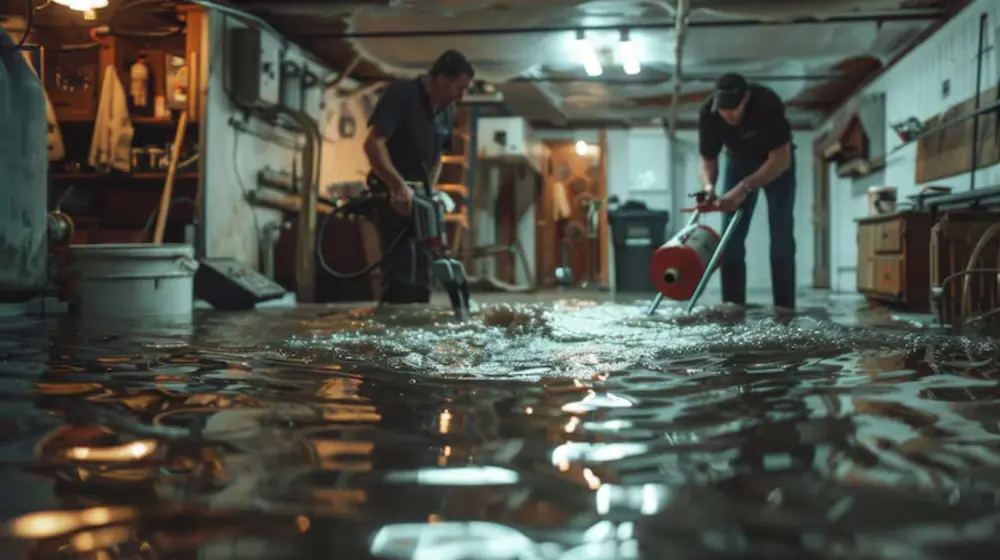
Burst pipe water damage
Burst pipes get the headlines, but many urgent water calls start with an ordinary failure in an ordinary room. The scenario tells the crew where the water went and what category it is.
Pipe under a sink
A split supply line or loose trap floods the cabinet floor, then the subfloor. Close the angle stop under the sink, or the main valve if it will not turn, and empty the cabinet.
Washer valve break
A failed hose or valve can run at full line pressure until someone notices. Close the main valve, since the small shut-offs behind the machine are often what failed.
Condensate line backup
A clogged air conditioner or furnace condensate line overflows its pan and wets a ceiling or closet slowly. It shows up as a stain or a damp wall before anyone sees a puddle.
Toilet overflow
Lift the tank lid and close the float, or close the valve at the wall. Treat the floor as contaminated, because bowl water can carry waste.
Water on the floor right now?
Call the dispatch line, say where it started and how deep it is, and wait for the dispatcher's instructions before touching anything electrical.
Marblehead notes: the Causeway, the Neck and harbor-side flooding
The Causeway is the only road onto Marblehead Neck, home to roughly 3,000 residents, and the state's 2017-2018 resilience planning report said it closed seven times in the year it covered. The same report calls it a hazard during storms, wind-driven waves and extreme high tides. If you live on the Neck, tell the dispatcher which side of the Causeway you are on, because a closure can affect access.
That report also lists flood-prone areas including Atlantic Avenue at Preston Beach, Marblehead Harbor streets such as Front and Gregory, Little Harbor to Doliber's Cove, and West Shore Drive. Standing water there can return with the next tide or rain, so tell the crew what the weather is doing. Atlantic Avenue (Route 129) leads south toward Swampscott, which the dispatch line also covers.
According to the town's drainage page, homeowners are prohibited from discharging sump pump connections into the sanitary sewer. If a sump pump is failing, do not rig a hose to a sewer cleanout, and ask the town DPW how to discharge legally.
The town's hazard planning documents cite storms such as Nemo in 2013, Juno in 2015, the Patriot's Day Storm of 2007 and the March 2018 coastal storm that received a federal disaster declaration. Nor'easter flooding is storm water, not clean water, so treat it as contaminated and read flood damage restoration for the next steps.
Sources: Marblehead MVP Planning Grant Report 2017-2018 (mass.gov). Town drainage and sump pump page (marblehead.org/node/151). Disaster declarations table in the town's 2023 hazard plan.
Cost factors
Depth and volume
Several inches across a basement call for more pumps and hours than a wet kitchen corner.
Contamination level
Clean, gray and black water need different protective gear and cleaning steps.
Access
Basement stairs, crawl spaces and the distance to a discharge point change setup time.
Follow-on drying
Extraction is the first stage. Moisture mapping and drying are scoped separately once the water is out.
Time of the call
After-hours work on an active loss is scoped like any other, with the scope explained first.
Scope and price come before the pumps start. A burst pipe is the kind of sudden, accidental loss that policies often cover, but flood damage is usually excluded without a separate flood policy, so ask your insurer how yours reads. Your own numbers depend on what the crew finds in the walls and floors, and the dispatch line is where that starts.
Frequently Asked Questions
Do you handle water removal emergencies at night or on weekends in Marblehead?
Yes. A 2 a.m. burst pipe and a Sunday washer flood get the same dispatch line. You will get safety steps on the call while a crew is arranged, and same-day response is offered when available.
Is it safe to walk through the standing water?
Not until you know the power situation. Water around outlets, cords or appliances can be energized, and sewage water carries waste. If you are unsure, stay out.
Can I use a shop vacuum myself?
For a small clean spill, a wet-rated vacuum can help. For anything deeper, or any water from a toilet or drain, leave it to the crew, because pumps remove more and protective gear matters.
How long does water removal take?
It depends on depth, floor area and how many rooms are wet. Pumping can be quick, while pulling moisture out of carpet and pad takes longer. Extraction is only the start, and drying continues for days.
My basement keeps filling after it rains. Will removal fix that?
No. Removal clears the water that is there, but it is not waterproofing. A drainage or waterproofing contractor addresses where the water enters, and the town's sump pump rule limits where a pump may discharge.
Will pumping the water out prevent mold?
It helps, because mold needs moisture. The structure still has to be dried, and the MA DPH homeowner mold guide points to drying leaks and floods within 48 hours. See mold remediation if you already see growth.
Is a flooded basement covered by my homeowners policy?
Standard homeowners policies do not cover flood damage, mass.gov says, although a sump pump failure or water backup rider may help. A burst pipe is a different event and is often covered. Ask your insurer which one you have.