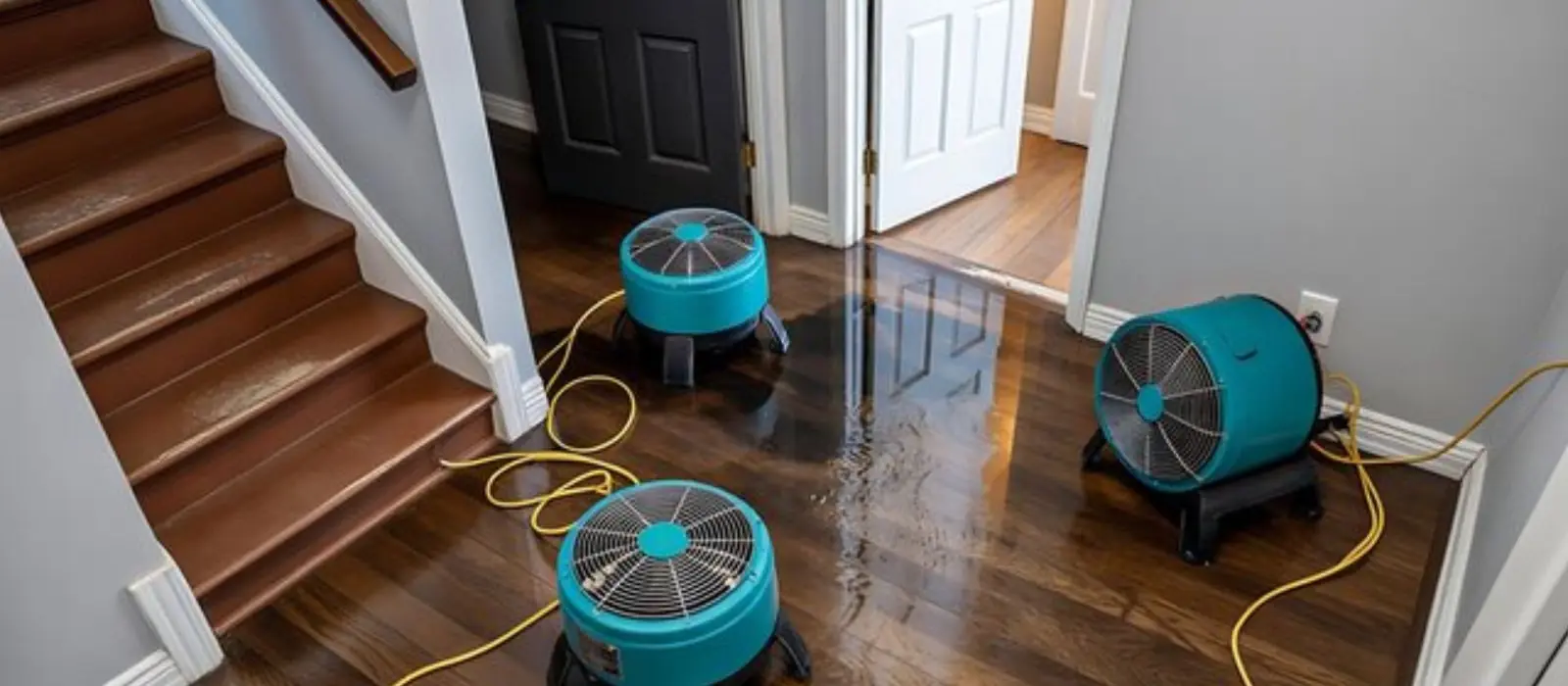
Water is moving through your Marblehead home right now
If water is still coming in, treat it as an emergency. The dispatch line answers 24/7, and most of the damage control happens in the first 24 to 72 hours. While you wait for a crew, these steps help most.
- Stop the source. Close the fixture shut-off valve, or the main water valve where the line enters the house, often near the meter in a basement or utility room.
- Cut power to wet areas only if the electrical panel is dry and you can reach it without standing in water. If water reaches outlets, appliances or the panel, stay out and phone 911 or the utility first.
- Lift rugs, electronics, books and valuables onto dry surfaces, and keep children and pets out of any water that came from a toilet, drain or outdoor flooding.
- Photograph the water, the source and the damaged items before anything moves. Mass.gov advises photographing damage inside and outside, and your insurer will ask for it.
A damp wall, a spreading stain or a musty smell
A wall that feels cool and damp, a ceiling stain that grew overnight, or baseboards starting to lift all point to water inside the cavity, not just on the surface. Painting over it leaves wet framing behind. Finding where the moisture went and drying it out is a trade called water mitigation, and it starts with a meter rather than a paintbrush.
What happens in the first 24 to 72 hours
Stop the source and check safety
The crew confirms the water is off, looks for electrical and sewage risk, and decides which rooms can be entered.
Start extraction
Pumps and wet vacuums pull standing water first. Water removed as liquid never has to be evaporated out of the structure.
Map the moisture
Moisture meters and thermal imaging show which walls, floors and ceilings are wet, including areas that look dry.
Set up drying
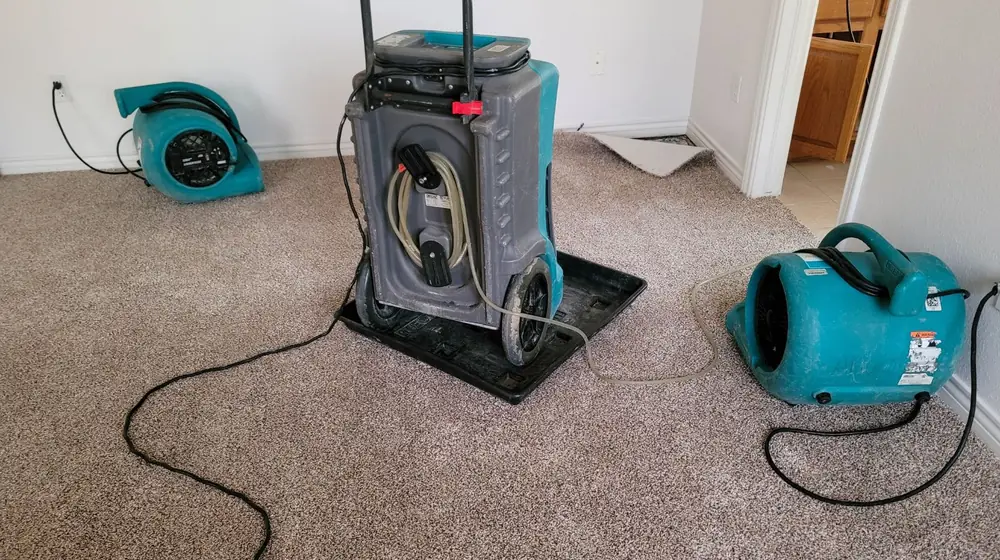
Air movers and dehumidifiers go where the map says, not at random. Soaked carpet pad and wet insulation often come out so the layers underneath can dry.
Monitor and adjust
Readings are taken again on later visits and equipment is moved or removed as materials reach their dry target. Drying ends when the numbers say so, not after a set number of days.
Structural drying
Structural drying is the longest part of mitigation, and the equipment is simpler than it sounds. Air movers are high-velocity fans that push air across wet surfaces so moisture leaves the material. LGR (low grain refrigerant) dehumidifiers pull that moisture out of the air so it does not settle back into the walls. Without the dehumidifier, the fans only stir humid air around the room.
Moisture meters read wood, drywall and plaster, and a thermal camera shows cool, wet patches behind finished surfaces. The crew records readings on each visit and compares them with a dry reference taken from an unaffected part of the house. That logging, which the ANSI/IICRC S500 water damage standard covers, is how a wall is shown to be dry instead of guessed at.
Most structures need several days of drying, and thick plaster, older framing or hardwood can take longer than modern drywall. Equipment stays until readings reach the target, so the schedule follows the materials, not the calendar. The crew sets and monitors the equipment, and there are no rentals.
| Water category | Typical source | Drying approach | Porous materials |
|---|---|---|---|
| Category 1 (clean) | Broken supply line, overflowing sink | Extraction, then air movers and LGR dehumidifiers, often drying in place | Often saved if the water is caught quickly |
| Category 2 (gray) | Washer or dishwasher overflow | Extraction, cleaning, then structural drying with some lower drywall removal | Carpet pad and soaked insulation commonly removed |
| Category 3 (black) | Sewage backup, outdoor flood water | Containment, removal of porous materials, cleaning, then drying | Drywall, insulation and carpet usually removed |
| Clean water left to sit | Supply leak untouched for days | Handled as gray water with more removal and closer monitoring | Moisture may have reached framing |
Safety steps in the first hour
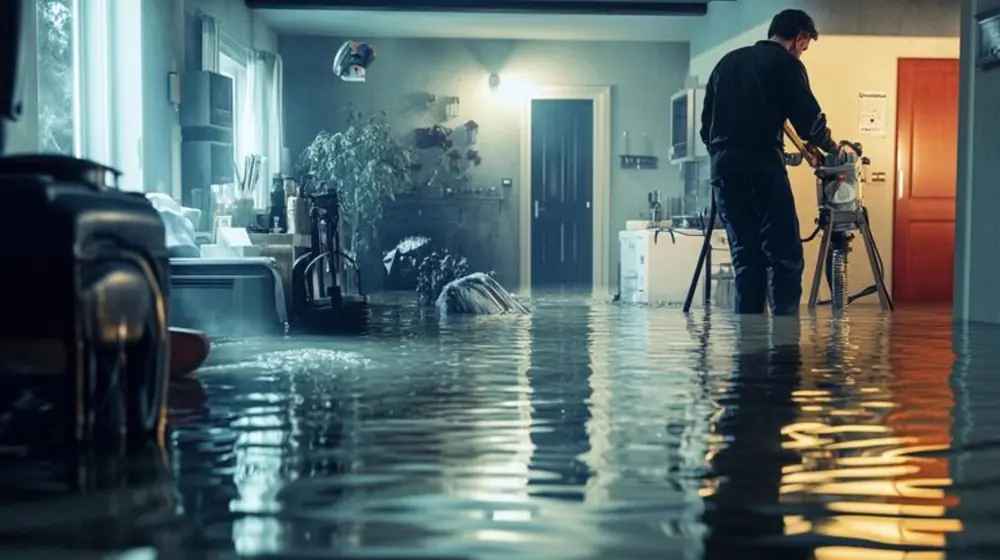
- Turn the main water valve off, or the fixture shutoff if the leak is local, before anything else.
- Switch off power to wet areas only if the breaker panel is dry and you can reach it without standing in water.
- If you smell gas, see sparks or hear buzzing from outlets, leave the building and call 911 or the utility first.
- Move valuables, rugs and electronics to dry rooms and prop up furniture legs with foil or plastic if you can do it safely.
- Keep a list of what got wet and when you first noticed it, since drying decisions and insurance notes both depend on timing.
Water still in the house?
Mitigation works best the sooner it starts. Call the dispatch line and say where the water is coming from.
Marblehead notes: older houses, Old Town and harbor-side damp
Old Town is the original center of Marblehead and is largely protected by the Marblehead Historic District, so some houses there have older framing and plaster walls. Plaster can hold moisture longer than modern drywall and cannot be judged by touch. Tell the dispatcher the age of the house and where the water entered.
The town's October 2023 Hazard Mitigation Plan states that flood zones are present throughout Marblehead, and the state's resilience planning report names harbor-side streets such as Front Street among flood-prone areas. Humid air near the water can slow drying, so ask the crew how they control humidity. To see your own exposure, look up your address on the FEMA flood map.
Storm or tidal flooding belongs on the flood damage restoration page, and the cleaning that follows a contained leak is covered under water damage cleanup.
Sources: Marblehead Hazard Mitigation Plan, October 2023 (marblehead.org). Marblehead MVP Planning Grant Report 2017-2018 (mass.gov). Marblehead Historic District Commission (marbleheadma.gov).
Cost factors
Size of the wet area
Square footage and the number of rooms and floors the water reached set how much equipment and monitoring the job needs.
Water category
Clean supply-line water is dried in place more often. Gray and black water add removal, cleaning and containment.
Materials involved
Hardwood, plaster and concrete dry at different speeds, which changes the days of equipment time.
Time since the loss
Water that sat for days soaks deeper and usually needs more removal than water caught in the first hours.
Access and monitoring
Finished basements, tight crawl spaces and multi-story homes affect setup and the number of monitoring visits.
The crew explains scope and price before any equipment is set. Homeowners policies often respond to a sudden, accidental loss such as a failed supply line, and often do not respond to a slow leak left alone, so read your policy or ask your insurer. Your own numbers depend on what the crew finds in the walls and floors, and the dispatch line is where that starts.
Frequently Asked Questions
Do you handle water mitigation emergencies at night or on weekends in Marblehead?
Yes. Calls are taken overnight, on weekends and on holidays. The dispatcher can talk you through shutting off water while a crew is lined up, and same-day response is offered when available.
The wall feels damp but I cannot see where the water is coming from. What should I do?
Close the main water valve and see whether the dampness stops spreading, then photograph the area and note any stain edges with a pencil line and time. A hidden supply leak, a roof leak or condensation can all look alike, and a moisture meter and thermal camera can trace it without opening every wall.
What equipment dries a house, and how long does drying take?
Air movers, LGR dehumidifiers, moisture meters and often a thermal camera. Drying commonly takes several days, and plaster, hardwood and older framing can take longer. The crew sets and monitors the gear, and there are no equipment rentals.
How soon does mold become a concern after a leak?
Mold needs moisture, so the goal is to get materials dry quickly. The MA DPH homeowner guide notes that the Housing Code requires areas to be dried within 48 hours of leaks and floods and sets 24 hours as its target. If mold is already visible, see mold remediation, and take health questions to a physician.
Is water mitigation the same as water damage repair?
No. Mitigation removes water and dries the structure. Repair rebuilds what could not be saved, such as drywall, flooring and paint, and it begins once readings show the materials are dry. Our water damage repair page covers that second stage.
What should I keep for my insurance company?
Photos and video of the damage and the source, plus a list of affected items. Mass.gov notes that a standard policy usually covers water damage that is sudden and accidental and that flood damage is excluded without separate flood coverage. Ask your insurer what your policy says.
Will drying stop my basement from taking on water again?
No. Restoration dries and repairs what the water damaged, but it is not waterproofing or foundation work. If water keeps entering, a drainage or waterproofing contractor has to address the cause.