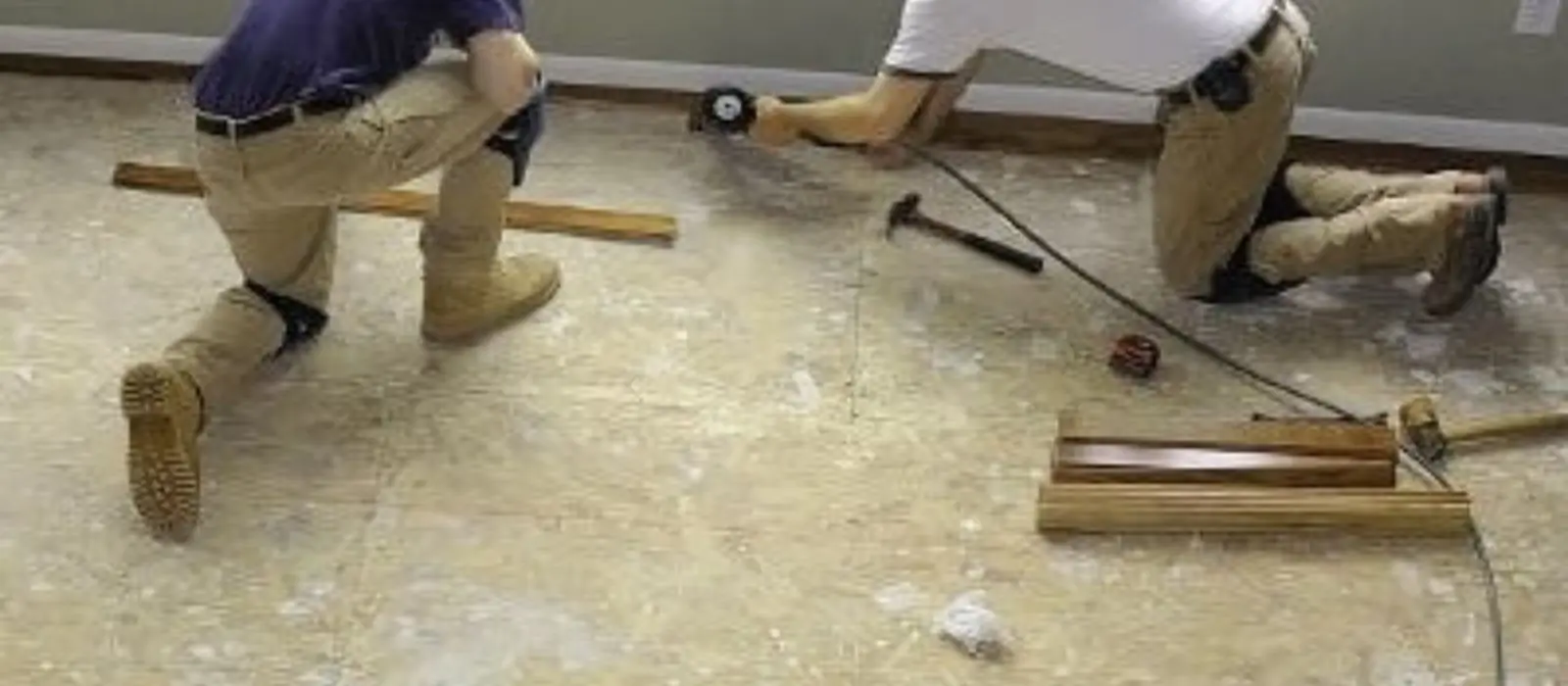
Repair starts only after the materials are dry
Closing up a wall that is still damp traps the moisture behind new drywall and paint. That is why repair follows dry readings, not the calendar. If your walls or floors have not been checked with a meter, water mitigation comes first, and this page picks up from there.
Confirm the dry readings
Moisture readings on framing, subfloor and drywall are compared with a dry reference before anything is closed up.
Remove what cannot be saved
Soft drywall, wet insulation, swollen trim and damaged flooring come out in clean cuts so the new material can tie into sound edges.
Rebuild the layers
Insulation, drywall or plaster patching, subfloor and cabinet boxes go back in the order they came out.
Finish and match
Stain-blocking primer, paint, trim and flooring finish are applied, usually corner to corner so the patch does not show.
Check the source
The leak that caused the damage must be fixed by the right trade first, or the new work gets wet again.
| Material | Often repaired when | Often replaced when |
|---|---|---|
| Drywall | Dry, firm and intact, with stains that can be sealed and primed | Soft, sagging or crumbling, or wet from gray or black water |
| Plaster | Cracks and small patches, with plaster still bonded to the lath | Loose from the lath, bulging or soaked through |
| Insulation | Dry batts or board away from the water | Wet batts or loose-fill that stayed damp or sagged |
| Hardwood floor | Mild cupping that flattens after drying, then sanding and refinishing | Severe cupping, buckling or boards that stay wet |
| Carpet and pad | Clean-water carpet dried quickly | Pad, and any carpet touched by contaminated water |
| Cabinets | Solid wood boxes that dry fully | Swollen particleboard boxes and bubbled laminate |
Ceiling and wall water damage repair
Most repair calls start with a stain or a soft spot, not a flood. The source is found and fixed first, then the cavity is dried, then the surface is rebuilt.
Bathroom ceiling stain
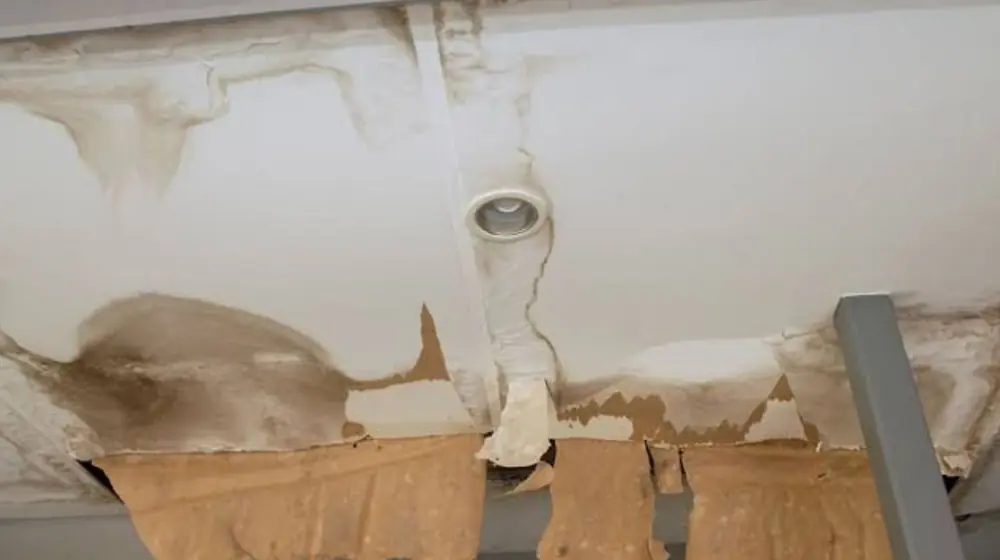
A brown ring under an upstairs bathroom often traces to a tub or toilet supply, a shower pan or a failed seal. Cutting a small inspection opening shows whether the insulation above is wet before any patching.
A soft spot forming
Drywall that feels spongy or gives under a finger has absorbed water over time. It is cut out and replaced, since painting soft board hides the problem without fixing it.
Roof leak
Water from a roof leak can follow a rafter and show up feet from the actual hole. The roofer repairs the roof, then the ceiling cavity is dried and rebuilt.
Siding leak into a kitchen wall
Water behind siding or around a window can run down inside an exterior wall and stain the wall beside the cabinets. The interior work is opening the wall, drying it and replacing insulation and drywall once the exterior is sealed.
If the back of removed drywall shows dark spotting, the job shifts to mold remediation, which follows ANSI/IICRC S520 practice.
Ready to scope the rebuild?
Call the dispatch line, describe what was wet, and say whether the area has been dried and metered.
Hardwood floor cupping and drying
Cupping is when board edges rise higher than the centers, because the underside has taken on more moisture than the top. It often follows a slow leak, a dishwasher or refrigerator line, or a damp crawl space, not just a spill. The floor can look fine for days while the boards slowly curl.
Sanding too early leaves a floor that flattens as it dries and then looks crowned at the edges. The usual path is to find the moisture source, dry the boards and subfloor, and confirm readings with a moisture meter before any sanding. Mild cupping often relaxes in time, which can take days to weeks depending on the boards.
Boards that buckle, stay wet or turn dark are generally replaced, and the pieces around them are blended in. Ask for the moisture readings in writing before the sander arrives, because they show whether the floor was ready.
Marblehead notes: historic district, permits and resale
Old Town, the town's original center, is covered by the Marblehead Historic District, and the Old Town and Gingerbread Hill Districts have their own commission. The commission's stated jurisdiction is changes visible from a public street or way, and its application lists roof work and restoration among the categories. Interior drywall is a different question from new siding, windows or roof work after a leak, so before ordering exterior materials ask the Historic District Commission what applies.
The Building Inspection Department issues permits to licensed contractors and to owners of owner-occupied one and two-family homes. Its page says failure to get a required permit before work starts triples the fee, though it does not address repair work specifically. Ask the department whether your rebuild needs a permit before demolition begins.
Marblehead is 85.2% owner-occupied with a median home value of $943,900 in Census data, so repairs are often documented for a future buyer's inspector. Keep dry readings, photos and the scope of work. If the water came from a sewer or storm backup, read about water damage cleanup first.
Sources: Marblehead Historic District Commission application instructions, marbleheadma.gov. Building Inspection Department, marblehead.org. U.S. Census Bureau QuickFacts, Marblehead town, 2020-2024.
Cost factors
Extent of the damage
A patched ceiling corner and a full wall rebuild are different jobs, and the number of rooms changes the scope.
Material and finish
Plaster, hardwood and custom trim cost more labor to match than drywall and standard baseboard.
Matching paint and flooring
Painting corner to corner or sanding a floor across rooms often adds area beyond the damage.
Hidden conditions
Wet insulation, rot or mold found when a wall opens can add work that was not visible at the start.
Access and sequencing
Work that waits on a plumber, roofer or inspection stretches the schedule.
A repair scope lists every material to be replaced and finished, and the price is explained before work starts. Policies often cover repairs after a sudden, accidental event, and often exclude damage from long-ignored leaks, so keep your dry readings and photos and ask your insurer. Only an on-site look at the affected rooms gives a figure that fits your property, so call the dispatch line.
Frequently Asked Questions
Can I just paint over a water stain on the ceiling?
Not until you know the source is fixed and the area is dry. Stain-blocking primer covers a mark but not a wet cavity, and a stain that grows back means moisture is still present.
How long should I wait after drying before repairs start?
Repairs start when moisture readings on the framing and drywall match a dry reference, not after a set number of days. Ask the crew for the final readings.
Will my cupped hardwood floor go flat again?
Mild cupping often relaxes once the moisture source is stopped and the boards dry, which can take days to weeks. Sanding should wait for dry readings. Buckled or blackened boards are usually replaced.
Does repair include fixing the leak itself?
Not the plumbing or roof. Those are separate trades, and they should finish before the rebuild so the new drywall does not get wet again.
Do I need a permit to repair water damage in Marblehead?
Ask the Building Inspection Department before demolition starts. The town's permit page says unpermitted work can cost three times the fee, and in the historic district, ask the town about exterior changes.
Will the new paint match the old?
A patch rarely blends alone. Painting the full wall or ceiling from corner to corner is the usual fix, and the scope is explained before work starts.
Does insurance cover water damage repair?
Coverage usually turns on cause. A sudden burst or overflow is more often covered than a slow leak, and flood damage is usually excluded, so ask your insurer before you sign a scope.
Do you repair homes outside Marblehead?
The network dispatches across Marblehead and nearby towns including Swampscott, Salem, Lynn, Peabody and Beverly.