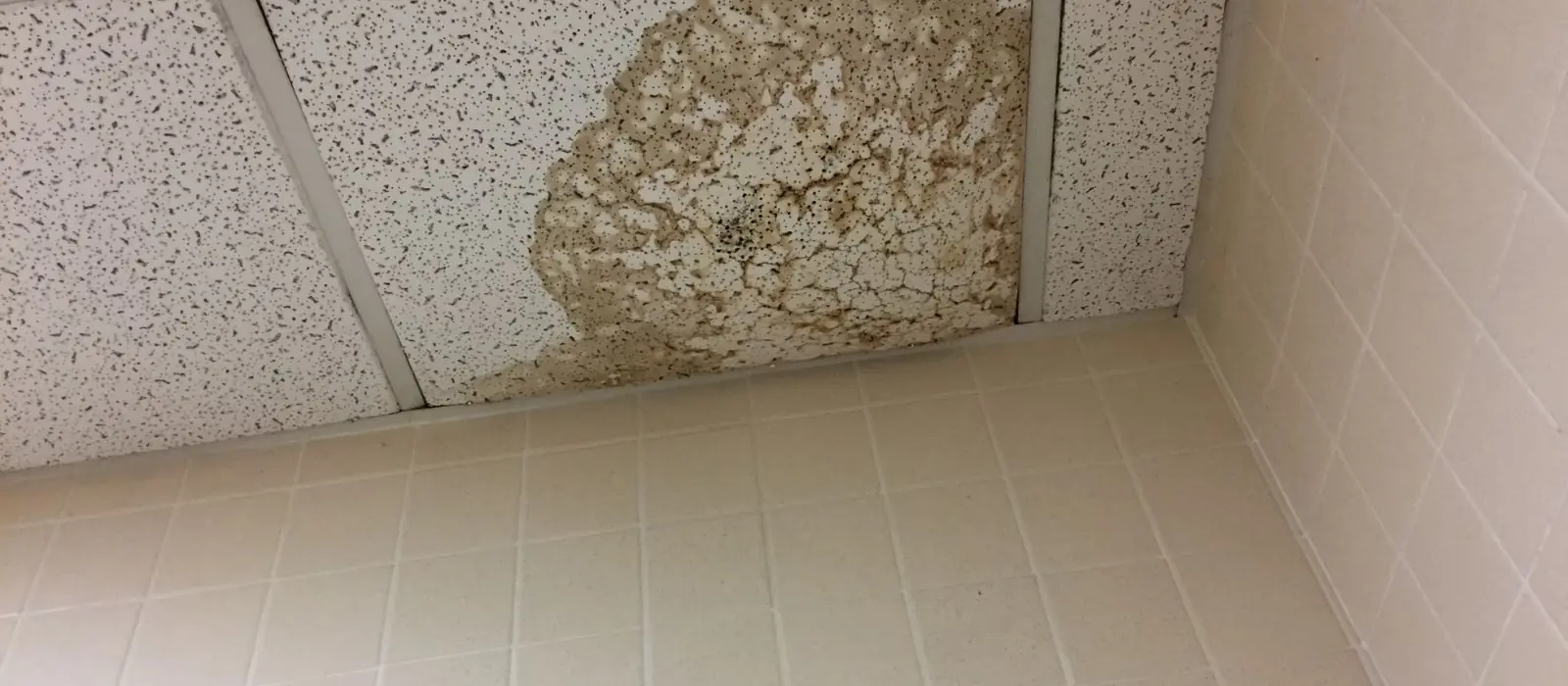
The first hour: stop the water before you fix anything
Water is still arriving, and that is the urgent part. No patch, primer or fan helps until the source is stopped. If the room above is a bathroom or kitchen, turn off the fixture and the shutoff valve under it. If you cannot find the cause, close the main water valve for the house.
Do the next few things in order, and stop whenever something feels unsafe.
Stop the source
Close the fixture valve or the main water valve. If it is raining and the roof is the cause, you cannot stop the weather, so move on to containment.
Make the room safe
Move people and pets out from under any bulge. Turn off the breaker for the room only if the panel is dry and you can reach it without standing in water. For any shock or gas risk, call 911 or the utility first.
Catch and contain
Put buckets under drips and a plastic sheet over furniture you cannot move. Lift rugs and valuables off the floor, and keep towels at the edges of the water.
Photograph before cleanup
Take dated photos and short video of the ceiling, the floor and anything damaged. Clear photos help any later insurance conversation.
Ventilate and start drying
Open a window if the air is dry and use fans on the floor, never aimed up at a wet ceiling. Wet material that stays wet is what turns a leak into mold.
Draining a bulge without bringing the ceiling down
A bellied section holds water that will come down anyway, and a controlled release is safer than a collapse. This only suits a small bulge in drywall that is not near a light fixture or a fan. Large sags, plaster ceilings, and any bulge you cannot reach from the side should be left to professionals.
Water from above can carry insulation fibers, rust and dirt, so protect your eyes and skin.
- Clear the floor below and lay down plastic, then set a large bucket directly under the lowest point of the bulge.
- Wear safety glasses, gloves and a hat. Stand to the side, not under the bulge.
- Use a screwdriver on a long handle or a similar tool to poke a small hole at the center of the lowest point, about the size of a pencil.
- Let it drain, and be ready to swap buckets. Poke one or two more small holes only if flow stops while the ceiling is still bellied.
- Do not cut a large opening. Small holes release water while keeping the ceiling in one piece, and they are easier to patch.
Stopping the source: three common causes and the first move
Failed supply line or pipe
Shut off the fixture valve or the main, then open a faucet at the lowest point to drain the line. A plumber should repair the pipe or joint before any ceiling work.
Overflowing or leaking fixture
A cracked toilet supply, a loose tub drain or a failed shower pan leak only when used. Stop using it and have the fixture or seal repaired, then dry the floor and ceiling together.
Roof or flashing leak
If water follows rain, a temporary tarp or a roofer's repair is the fix. Check the attic with a flashlight, and move insulation back only after the wood is dry.
Water coming through and you are not sure why?
Call the dispatch line, describe the ceiling and the room above, and licensed and insured restoration professionals can plan the drying. Same-day response when available.
Marblehead note: know your shutoff before you need it
The Marblehead Water Department delivers water to individual customers and businesses, and the town page states that all water comes from the MWRA. If a supply line fails, knowing where the main valve is inside your house lets you stop the water in seconds. Find it now, label it, and check that it turns.
The Water Department office hours on the town page are Monday to Thursday, 7:45 to 5:00, and Friday, 7:45 to 12:15. That office is a practical contact for questions on the service side of your water connection. The page lists office hours only, so for a leak that starts at night, rely on your own interior main valve and a plumber.
Source: Town of Marblehead Water Department, marblehead.org
Homeowner job or professional job?
| Situation | Reasonable for a homeowner | Call a professional |
|---|---|---|
| Small, dry stain after a fixed leak | Prime with stain blocker and repaint | If the ring keeps growing |
| Small drywall bulge, no fixture nearby | Drain with a small hole, as above | If it refills or the ceiling still feels wet |
| Large sag or any plaster ceiling bulge | Stay out and cut power if safe | Yes, same day |
| Ceiling wet more than a day or two | Run fans and open windows | Yes, to check insulation and framing |
| Dark spots or a musty smell | Close the room and do not scrub | Yes, mold needs moisture control and practice that follows ANSI/IICRC S520 |
| Water from a toilet, drain or sewer | Keep people out | Yes, contaminated water needs protective handling |
When the ceiling is dry: small fixes you can finish yourself
Once the source is fixed and the ceiling has been dry for several days, a stain the size of a hand needs little more than a stain blocking primer and a coat of ceiling paint. Test with a pencil mark first and watch the edge for a week or two. If the ring has not moved, go ahead.
If drywall paper has peeled or the surface is soft, cut out the damaged section back to a framing member and replace it. That job runs longer than it looks, since the joint compound needs time between coats.
Insurance note
Sudden and accidental water damage is often covered by a homeowners policy, while gradual leaks and neglect often are not. Standard policies generally exclude flood damage, which usually needs separate flood coverage. Check your policy and ask your insurer before you start permanent repairs, and keep your photos and receipts.
For active leaks the emergency water removal line and water damage cleanup are where to start, and Marblehead Water Damage Pros dispatches to Lynn and Peabody as well as Marblehead.
Frequently Asked Questions
Should I poke a hole in a bulging ceiling?
For a small bulge in drywall away from fixtures, a small hole at the lowest point can release water in a controlled way. Stand to the side, wear eye protection and place a bucket below.
For a large sag or a plaster ceiling, do not try it. Keep clear and call for help.
What do I do first when a ceiling starts leaking?
Stop the source if you can: close the fixture valve or the main water valve. Then move people away from the bulge, protect belongings and take photos.
If water is near light fixtures, deal with electrical risk before anything else, calling 911 or the utility if you cannot do it safely.
How long can a ceiling stay wet before mold is a concern?
Mold needs moisture, and Massachusetts DPH homeowner guidance says leaks and floods should be dried within 48 hours, with 24 hours as a better target.
If a ceiling has stayed wet longer, or you see dark spotting, close off the room and call for an assessment.
Where is the main water shutoff in my Marblehead house?
It is commonly where the water line enters the house, often in a basement, utility room or crawl space, but every house differs. Find it, test it and label it before you ever need it.
The Marblehead Water Department can answer questions about the service side of your connection during its listed office hours.
Can I use a fan or heater to dry a wet ceiling?
A fan on the floor moving air across the room helps. Do not aim fans up at a sagging ceiling, and avoid space heaters near wet material.
Drying the cavity above the ceiling usually needs equipment and moisture readings.
Do I need to replace drywall that got wet?
Not always. A brief wetting from clean water that dries fully may be repaired with primer and paint. Soft, sagging, stained through or moldy drywall is usually cut out and replaced.
A moisture reading is the only reliable way to know the board is dry.