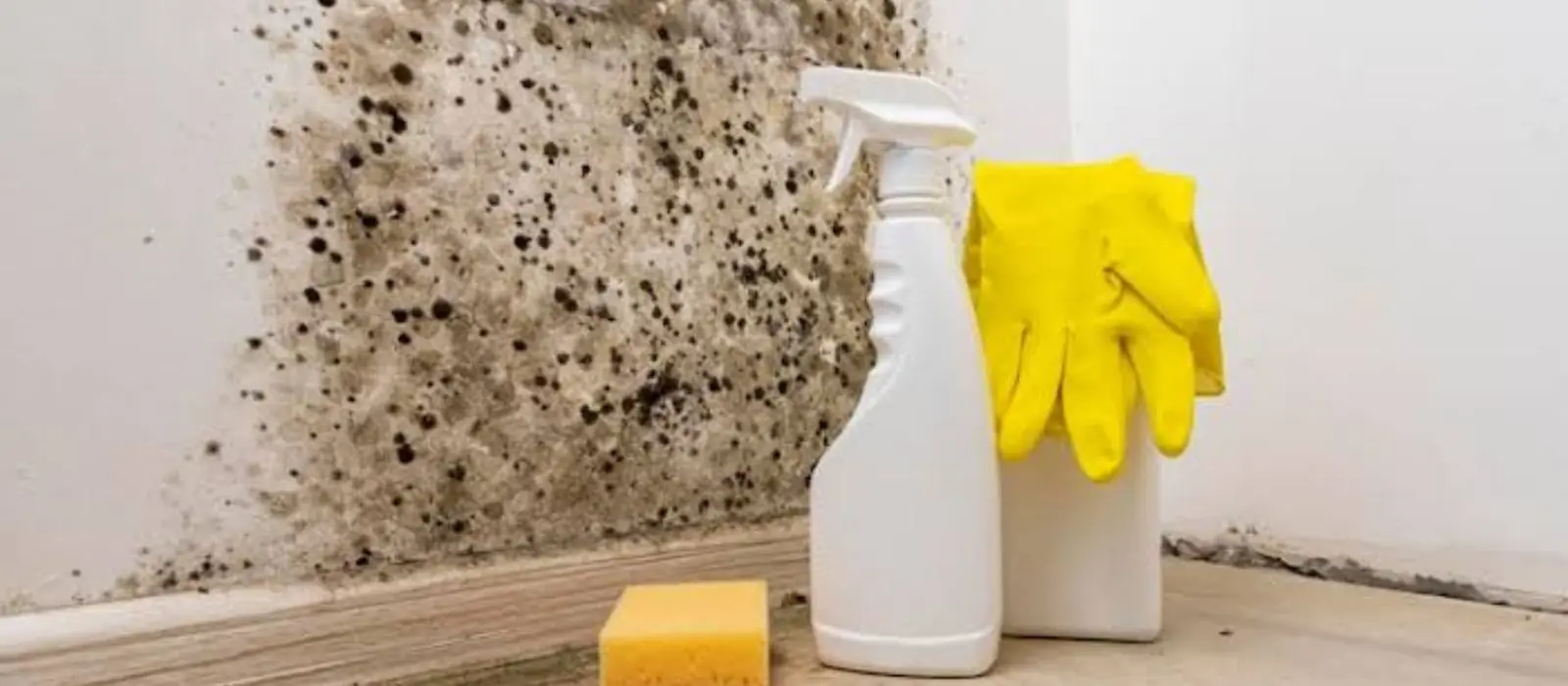
Mold is a moisture problem with a surface symptom
Cleaning a visible patch removes what you can see, but the patch grows back if water keeps arriving. The Massachusetts DPH homeowner guide is blunt on this point. If mold or a musty smell is still there after drying, it says the source was not fixed or the cleaning fell short, and the whole process gets repeated once the source is fixed.
So the order is fixed. Find the water, stop it, dry the area, then clean or remove what mold has damaged. Skipping the first step is why so many homes cycle through the same bathroom ceiling stain every year.
Bathrooms, kitchens and laundry rooms
These rooms make steam and splashes every day, and the guide's fixes are practical. Install and run exhaust fans that vent outdoors, use a shower door instead of a curtain, and keep caulk intact around showers, tubs and sinks. Vent the clothes dryer outdoors and keep its ducting unblocked.
Washing machines should be installed with a proper drain, since overflow behind a machine is a common hidden source. A fan that vents into the attic or between joists only moves the moisture somewhere less visible.
Windows, closets and cold surfaces
Condensation forms when warm indoor air touches a cold surface, so look at windows, uninsulated exterior corners and cold-water pipes. The guide recommends insulating cold-water pipes to prevent condensation and sealing cracks and utility pipe entry points. Wipe window sills dry in winter rather than letting beads of water sit.
Closets on exterior walls trap still air, so give clothing and boxes some space from the wall and keep the door cracked when a room runs cold. Do not push furniture tight against a cold outside wall, because it blocks the warm air that would keep that surface drier.
Air conditioners, dehumidifiers and condensate
Cooling equipment makes water on purpose, and it has to go somewhere. The guide says to keep air filters clean or replaced, keep condensation pans and coils clean, and keep the condensate pump in good repair. Keep windows and doors shut while air conditioning runs, so it is not cooling humid outdoor air.
For window units, insulate the unit and tilt it slightly outward to control condensation. Dehumidifiers need the same discipline: empty the bucket often, or pipe the unit to a drain.
| Place | Common moisture source | First fix |
|---|---|---|
| Bathroom ceiling and walls | Shower steam with no outdoor exhaust, failed caulk | Run a fan that vents outdoors, re-caulk, add a shower door |
| Window sills and frames | Condensation on cold glass, leaking seals | Wipe dry, check seals, reduce indoor moisture |
| Closets on outside walls | Still air against a cold wall, small wall leaks | Add clearance, check the wall for dampness |
| Basement walls and floor | Seepage, cold pipes, failed sump pump | Fix grading and drainage, insulate pipes, service the pump |
| Around AC units and ducts | Clogged condensate drain or pan, sweating ducts | Clean the pan and drain, repair the pump |
| Attic underside of the roof | Roof leak or warm moist air leaking up from the house | Find the leak, vent fans outdoors, call a roofer or crew |
Attics and roof-line moisture
The DPH guide does not cover attics, so this part is general building practice rather than something it states. Dark staining on roof sheathing near the eaves or around bath fan ducts usually points to either a roof leak or warm, moist air leaking up from the living space. A roofer or a restoration crew can tell the difference, and the fix is different for each.
Never cut into a sagging or stained ceiling below an attic leak yourself. Water can sit in insulation above the drywall, and a ceiling holding that water can sag. Stay out from under it.
Mold in several rooms at once?
Patches in different rooms often share a moisture source. Call the dispatch line and describe where you see them, and a crew can explain what a scope would include.
What the guide says about humidity numbers and drying
Many articles quote a target indoor humidity percentage. The DPH guide gives no specific number, so this post does not invent one. What it does give is a time limit for wet materials. Wet areas should be completely dry within 24 hours, with fans or dehumidifiers and air moved outdoors.
A humidity meter can still help you spot trouble, but treat its reading as one clue next to what your eyes, nose and a moisture meter find. If a room keeps feeling damp, a crew with moisture meters and water mitigation equipment can find wet material you cannot see.
Bleach and other cleaning myths
Bleach has a reputation it does not earn on every surface. Harsh chemicals are not a routine recommendation in the guide, and it advises against applying biocide to porous material that is already moldy, such as wallboard. That material comes out instead.
Where bleach is used on a hard surface, the guide sets a ceiling of one cup of laundry bleach to a gallon of water, with the windows or fans moving air outdoors, and warns that bleach plus ammonia makes a toxic gas. Plain detergent and water, applied with a wet sponge or brush, is the cleaning method it describes for small areas.
- Do not paint or caulk over mold, because it hides the problem without removing it.
- Do not dry scrape or brush mold, and do not touch it with bare hands.
- Do not leave the area wet, and do not run central heating and cooling during cleanup without sealing the vents.
- Do not try to clean a patch larger than about 10 square feet. The guide points to professionals beyond that size.
When to stop
Stop and call if the mold follows a sewage backup or flood, covers a large area, returns after you fixed the source, or sits where you would have to open a wall. For any small cleanup, wear an N-95 mask, sealed goggles, gloves and long sleeves. Questions about whether mold is affecting someone in the home belong with a physician.
For bigger jobs, mold remediation crews are dispatched to Marblehead and to nearby towns such as Beverly and Salem.
Marblehead note: older homes and the Historic District
Wikipedia describes Old Town as largely protected by the Marblehead Historic District. If your house stands in that area, window replacement, exterior vents or roof changes made to cut moisture may need review before work begins. The town publishes a Certificate of Appropriateness application for its historic commission, so ask the town whether your change needs one.
Moisture fixes inside the house, such as exhaust fan use, dehumidifiers and drying a wet room, are different from exterior alterations. Settle the exterior question first when a window or attic vent is part of the cure, so you do not buy materials you cannot install. Ask the building department about permits for any structural repair.
Source: Wikipedia (general source on the Marblehead Historic District), en.wikipedia.org. Town of Marblehead, marblehead.org (Certificate of Appropriateness application).
Frequently Asked Questions
What is the best way to get rid of mold in a house?
Fix the moisture source first, then clean or remove what is moldy. For small areas the guide describes a detergent-and-water wash, and it advises throwing away porous materials that mold has contaminated.
Does bleach get rid of mold?
Harsh chemicals are not the guide's routine advice. Where bleach is used on a hard surface, it stays within a cup per gallon of water and never meets ammonia. Bleach does not fix the moisture source either.
What humidity level prevents mold?
The DPH homeowner guide gives no specific humidity number, so check with your contractor or building professional before relying on one. The guide does tell you to dry wet areas within 24 hours and to ventilate to the outdoors.
Can my air conditioner cause mold?
It can contribute if condensation is not controlled. The guide says to keep filters, pans and coils clean, keep the condensate pump working, keep windows shut while cooling and tilt window units slightly outward.
Will mold go away on its own if I dry the room?
Drying removes the condition mold needs, but growth that already stained or soaked into material does not vanish. Wash hard surfaces and remove porous materials that are moldy. Visible mold after drying means the cleaning or the moisture fix was not enough.
I live in the Marblehead Historic District. Can I change windows or vents to fix moisture?
Possibly, but check first. Old Town is largely protected by the Marblehead Historic District, and the town has a Certificate of Appropriateness application for its historic commission. Ask the town before you order windows or alter exterior vents.