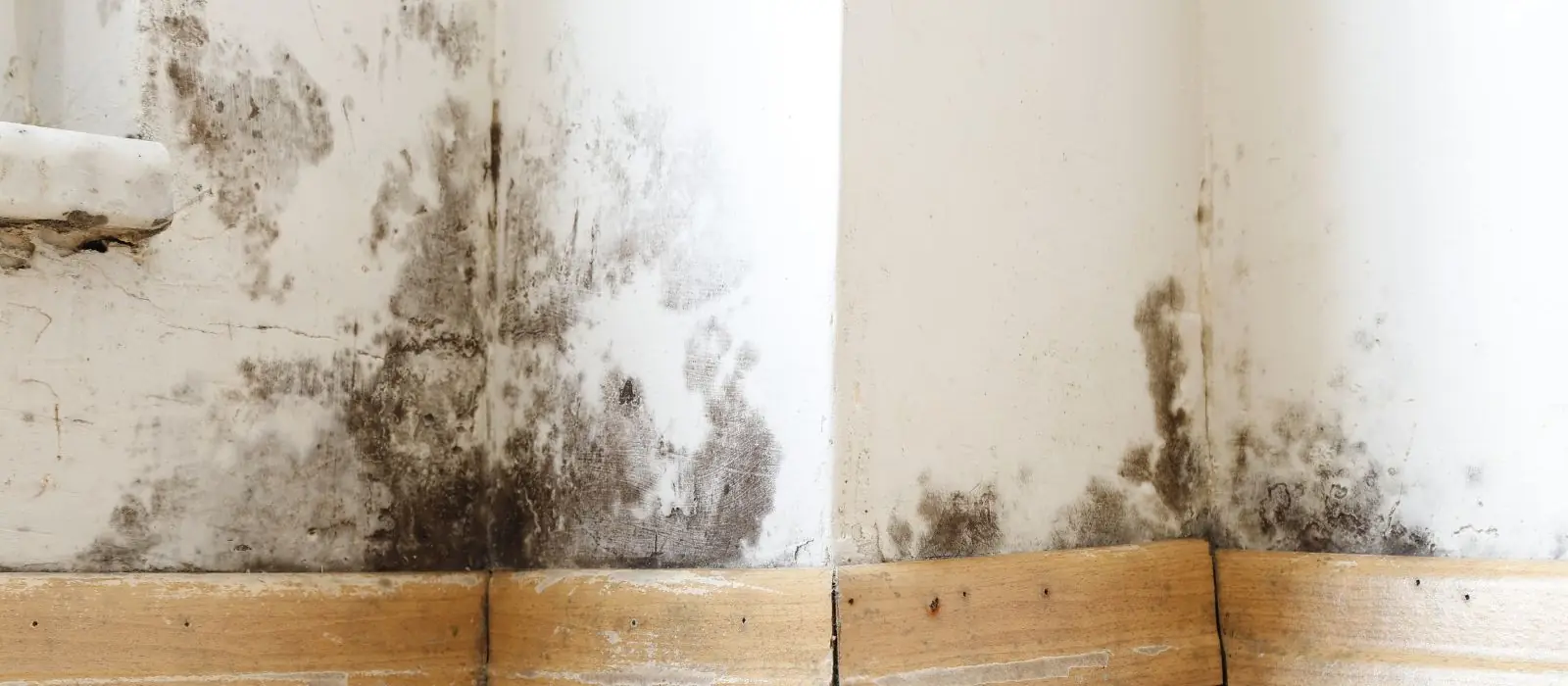
What removal means once the job is past a sponge and detergent
Small patches can be washed by a homeowner, and the Massachusetts DPH homeowner guide describes how. Past about 10 square feet, or when mold sits on material that has to come out, the work becomes a contained project. The goal is to take the growth and the damaged material out of the basement without spreading dust into the rest of the house.
A professional job also treats the water problem as part of the scope. Mold needs moisture, so a crew that removes mold and leaves a damp wall or a failing sump pump has handled the symptom only.
Containment and negative air: keeping the work in one place
Containment means plastic sheeting sealed with tape around the work zone, usually with a zippered door for entry. The point is to keep dust from drifting up the stairs while drywall is cut and bagged. Heating and cooling vents in the zone are covered so the system does not move air through the work area, which matches the DPH guide's advice to shut off central HVAC and seal vents.
Negative air adds a machine that pulls air out of the zone through a HEPA filter and exhausts it, ideally to the outdoors. The zone then sits at slightly lower pressure than the rest of the house, so air leaks inward through small gaps rather than outward. Crews often check this with a simple smoke or tissue test at the plastic.
HEPA vacuums and damp wiping: the cleaning order
Common mold removal practice, which the ANSI/IICRC S520 standard publishes guidance on, works from the top down and from the dirtiest areas to the cleanest. Damaged porous material comes out first, then surfaces are vacuumed with a HEPA-rated vacuum, wiped damp and vacuumed again. A shop vacuum without a HEPA filter can blow fine dust back into the air, so ask what the crew uses.
Dry scraping and dry sweeping are avoided for the same reason, and the DPH guide also tells homeowners not to dry scrape mold. Wood framing is typically cleaned in place by HEPA vacuuming and damp wiping, and sanding or abrasive cleaning is used only where the scope calls for it.
Finished basements: carpet, drywall and insulation
A finished basement hides more. The DPH guide lists gypsum wallboard, wooden trim and insulation among the porous materials to throw away once mold, sewage or flood water has reached them. Carpet and pad that have been wet are in the same category in most scopes, which is why a finished basement costs more to open up than a bare one.
| Material | Typical handling | What to check in the scope |
|---|---|---|
| Wall-to-wall carpet and pad | Removed and bagged if wet or moldy | Whether tack strips and staples are removed, and how debris leaves the house |
| Painted drywall | Cut out past visible growth and bagged | How far above the wet line the cut goes, and who rebuilds |
| Fiberglass insulation behind drywall | Discarded when wet or contaminated | Whether insulation is replaced in the rebuild |
| Wood trim and baseboard | Discarded if porous and moldy, otherwise cleaned | Whether trim is saved or replaced |
| Wood studs and sill plates | HEPA vacuumed and damp wiped, with moisture checked before closing | Moisture readings before any new drywall goes up |
| Concrete floor and block walls | Cleaned and dried in place | Whether drying equipment stays until readings are normal |
Ask for the list in writing. A scope that says only 'remove mold' leaves the real decisions, such as how much drywall comes out, to argument after the demolition.
Mold behind a finished basement wall?
Describe what you see and what got wet when you call the dispatch line. A crew can inspect before any demolition and lay out the scope and the price up front.
After the work: verification and what the guide says about testing
Verification is where homeowners get confused. The DPH guide advises against environmental testing, meaning air or bulk sampling to identify types and amounts of mold, and notes that no federal or state standard sets a safe amount of mold. It also says testing does not change the need to clean visible mold and fix the moisture source.
Many written scopes still include a post-removal check, usually a visual inspection, moisture readings and sometimes sampling by an independent party. If sampling is in the plan, ask who performs it, what result counts as a pass and who pays for a retest. Keep the tester separate from the crew that did the removal, so no one is grading their own work.
Safety while work is under way
Stay out of the containment zone and keep children and pets away from it. Do not open the plastic to look, because that breaks the pressure setup. If you smell gas, see a sagging ceiling, or the basement has standing water near outlets or the panel, leave the area and call 911 or the utility before the restoration line. Health questions about mold belong with a physician.
Why basements in flood-exposed areas stay damp
A basement that gets wet more than once needs a moisture plan, not just a cleanup. Drying the structure with water mitigation usually comes first, and the mold remediation scope should say when equipment stays and how readings are taken.
The same dispatch line covers nearby Lynn and Peabody if you own a second property or are helping a relative.
Marblehead note: flood-prone neighborhoods and recurring basement moisture
The state-funded Municipal Vulnerability Preparedness planning report for Marblehead lists Goldthwait and Atlantic Avenue at Preston Beach among the town's flood-prone neighborhoods. In a flood-exposed area, a basement can take on water from storm surge, heavy rain or high groundwater more than once, and each wetting restarts the conditions mold depends on.
If you live in or near one of those areas, ask the contractor how the scope handles a repeat event, such as keeping a sump pump and battery backup in working order and which materials are safe to rebuild with. Check the FEMA flood map for your address, and ask your insurer what your policy does and does not cover.
Source: Massachusetts Municipal Vulnerability Preparedness (MVP) Planning Grant Report for Marblehead, 2017-2018, mass.gov.
Questions to settle before containment goes up
- Which standard does the crew follow? ANSI/IICRC S520 is the published standard for mold remediation, and you can ask any company whether its work follows it.
- How is the zone sealed, and is the negative air machine exhausted outdoors?
- What comes out, in writing, and who rebuilds drywall, insulation and flooring?
- How is the job verified, who does that, and what counts as a pass?
- What happens to the water source, and does the scope include drying equipment and moisture readings?
The DPH guide notes that Massachusetts has no license requirement for mold remediation, so the written scope is your best protection. Insurance is a separate conversation, since gradual leaks are often excluded and flood damage usually needs separate flood coverage, so check your policy before you spend.
Frequently Asked Questions
What does mold removal from a basement involve?
A typical professional job seals the work zone with plastic, runs a HEPA-filtered negative air machine, removes damaged porous materials, then HEPA vacuums and damp wipes the remaining surfaces. Drying and moisture readings follow, because mold needs moisture to grow.
Is negative air always required?
It depends on the size and conditions of the job, and the written scope should state what the crew plans and why. Small, simple jobs may use less containment than a large finished basement. Ask the company to explain its choice in terms of the S520 standard.
Do I need to throw out carpet and drywall?
Under the DPH guide, wallboard, wooden trim and insulation touched by mold, sewage or flood water are thrown out. Carpet and pad that stayed wet are handled the same way in most scopes.
Should I pay for mold testing after removal?
The DPH guide advises against sampling to identify types and amounts of mold. If your contract includes a post-removal check, ask what is measured and who performs it, and keep the tester independent of the remediation crew.
Can I stay in the house during basement mold removal?
Often yes, if containment holds and the basement is separated from living space, but the crew should tell you what to expect for your layout. Households with medical concerns should ask a physician before deciding.
Why does my Goldthwait or Preston Beach area basement get wet more than other basements?
The state's Marblehead planning report lists Goldthwait and Atlantic Avenue at Preston Beach as flood-prone neighborhoods. Basements near flood-exposed areas can take on water again, so a repair plan should cover the sump pump, backup power and how the structure is dried.