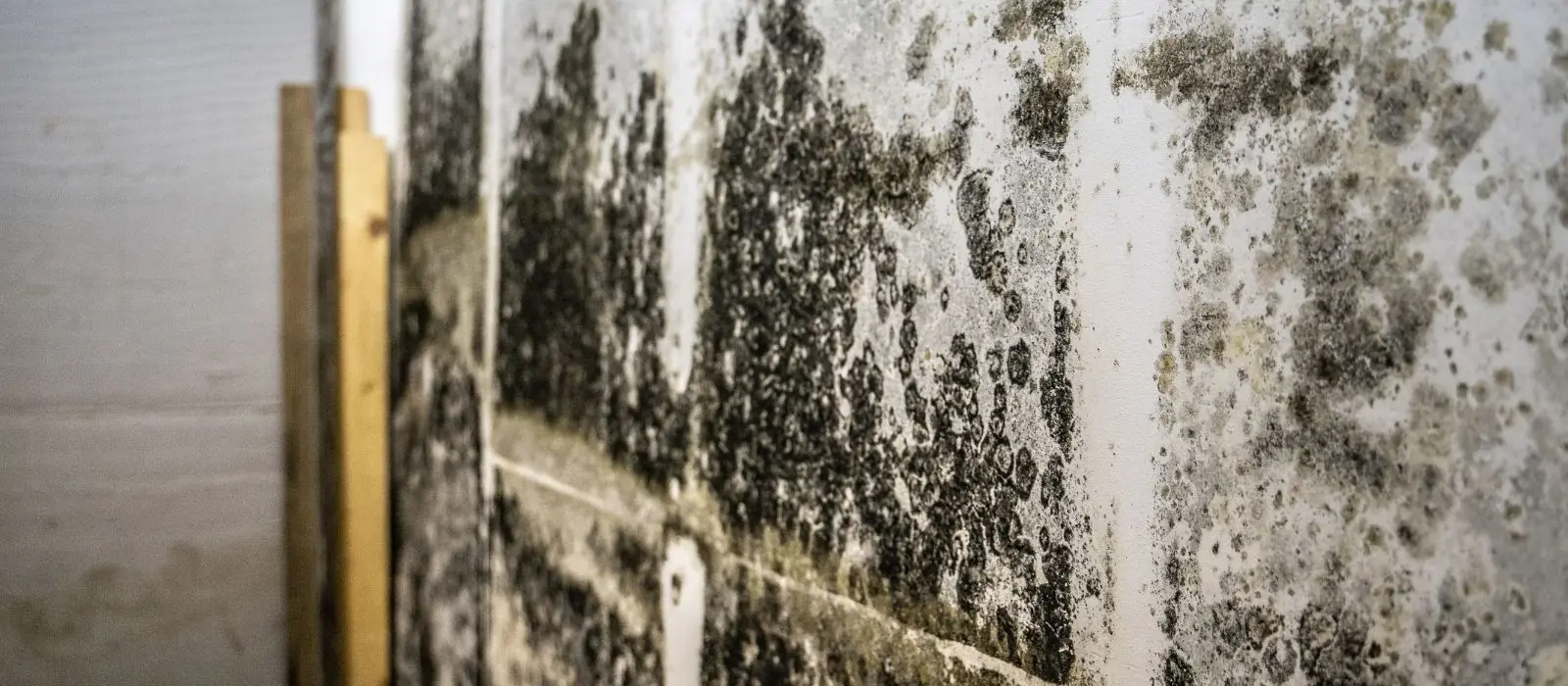
Find the water before you touch the mold
Mold needs moisture to grow, so scrubbing a basement wall without fixing the water source only buys time. The Massachusetts Department of Public Health (MA DPH) homeowner guide treats moisture control as the first job and cleaning as the second. A wall that gets damp again next month can grow mold again, however well it was cleaned.
Walk the basement with a flashlight after a rain. Look for water at the base of the wall, a tide line on the paint, white mineral crust (efflorescence) on block, drips on cold-water pipes, and a downspout that empties beside the foundation. Each clue points to a different fix, from extending a downspout to servicing a sump pump.
Masonry, concrete or painted drywall: what you are cleaning
The surface decides how much a homeowner can safely do. Bare concrete and block can usually be washed in place. Drywall, insulation and wood trim are porous, and the DPH guide says to discard porous materials contaminated with mold, sewage or flood water.
| Wall surface | Homeowner approach | Stop and call if |
|---|---|---|
| Bare poured concrete or block | Wash with detergent and water using a wet sponge or brush, then dry fully | Water seeps through the wall or growth returns after drying |
| Painted concrete or block | Same wash, but check for paint that bubbles or peels in sheets over damp masonry | Paint is lifting across a large area or the wall stays wet to the touch |
| Painted drywall | Plan to cut out moldy board rather than scrub it, since the guide says to discard contaminated wallboard | Board is soft or stained through, or there is mold on the back side |
| Insulation, wood trim, carpet edge | Discard if mold, sewage or flood water has reached it, and bag it before carrying it out | Material is soaked, or framing or electrical work is involved |
Small pieces of moldy drywall or trim are within reach of a careful homeowner. Anything that exposes wiring, plumbing or framing is a different job, and the guide notes that plumbing, electrical and structural work may legally require a licensed professional.
The cleanup steps the DPH guide describes for small areas
The guide's scale for do-it-yourself work is small. It cites EPA advice that professionals handle mold on areas larger than about 10 square feet, roughly a 3 by 3 foot patch. Below that size it describes a method built on detergent, water and good protection.
Dress for the work
Wear an N-95 respirator or mask used as the manufacturer directs, goggles without ventilation holes, long sleeves and pants, and non-latex gloves such as vinyl, nitrile or rubber.
Isolate the air
Shut off central heating and cooling and seal the vents in the work area with plastic. A running system can carry dust from the basement to every floor.
Wash, do not scrape
Clean with detergent and water, using a wet sponge or brush until no mold is visible. The guide says not to dry scrape mold or handle it with bare hands.
Bag and leave clean
Bag moldy items and discarded material, then take your shoes off before leaving the work area so debris does not travel upstairs.
Dry it fast
Run fans or a dehumidifier and ventilate to the outdoors. The guide sets a goal of drying wet areas completely within 24 hours.
Check the wall again after it dries. The guide says visible mold or a musty odor after drying means the moisture source or the cleaning was not sufficient, so fix the source and repeat the process.
Mold on more wall than you can reach safely?
If the patch is large, keeps returning or sits on material that has to be cut out, call the dispatch line. Scope and price are explained before work starts.
Bleach, paint and other shortcuts to skip
The guide does not recommend harsh chemicals as a routine step. If you choose bleach, it caps the mix at 1 cup of laundry bleach per gallon of water and asks you to ventilate to the outdoors. It also warns never to mix bleach with ammonia, which creates a toxic gas.
- Do not paint or caulk over mold. A fresh coat hides the patch without removing it or the moisture behind it.
- Do not spray biocide on moldy porous materials such as drywall or insulation. Remove them instead.
- Do not leave the wall wet after washing, and do not let wet material sit in a bucket in the basement.
- Do not keep central heating and cooling running during cleanup, because it moves dust through the house.
Safety before scrubbing
Stay out of standing water near outlets, panels or extension cords, and cut power to a wet area only if the panel is dry and safe to reach. If the water came from a sewer backup, an overflowing toilet or floodwater, stop. The guide treats flood water as potentially contaminated, so do not splash it or get it near your eyes, nose or mouth. Questions about how mold may affect a person belong with a physician.
When to stop and call a professional
The patch is large
More than about 10 square feet, or several patches along the same wall, is past the guide's small-area line.
The smell stays
The guide says mold can hide behind wallpaper, inside walls and under carpet, and searching for it can release spores. A musty odor after cleaning is a reason to get help.
Sewage or floodwater
Water from a backed-up drain or a flood is not ordinary dampness. Treat it as contaminated and leave it to a crew.
The wall is soaked
Soft drywall, wet insulation or mold on framing means material must come out and the wall must be dried with equipment.
Old houses add one more check. The guide says work that disturbs more than 6 square feet of painted interior surface must follow the lead renovation rules in 454 CMR 22.11, so ask about that before you tear out a painted wall section.
A wet wall in a wider wet basement is a drying job before it is a mold job, and water mitigation removes the condition mold depends on. Dispatch covers the North Shore, so a relative's house in Salem or a rental in Swampscott is covered by the same call.
Keeping the wall dry afterward
Cleaning is only half the job, and the guide lists the habits that hold a basement dry. Run a dehumidifier and either empty it often or use a continuous drain hose to a proper drain. Insulate cold-water pipes so they do not drip, and seal cracks and utility pipe entry points in the wall.
If you have a sump pump, check it. The guide says to monitor and maintain sump pumps, especially those on timers, because a pump that fails in a storm is how a dry wall becomes a wet one.
Marblehead note: where the sump pump discharge can go
Fixing the water source in a Marblehead basement often means a sump pump. Marblehead rules bar tying a sump pump discharge into the sanitary sewer, so wet-basement drainage has to go elsewhere. That means the discharge line cannot simply be tied into a sewer cleanout, so plan the route before you buy or move a pump.
To connect a pump to town drainage, the town page directs residents to the Department of Public Works at 781-631-1750 or [email protected]. Call before you plumb anything in, so the repair that dries your wall does not create a new violation. For the cleaning steps themselves, rely on the MA DPH guide above.
Sources: Town of Marblehead, marblehead.org (sump pump page). MA DPH homeowner mold guide, mass.gov.
Frequently Asked Questions
Can I remove mold from basement walls myself?
For a small area, yes. The MA DPH guide describes washing with detergent and water while wearing an N-95 respirator, goggles without ventilation holes, long clothing and non-latex gloves. It points to about 10 square feet as the size where professionals should take over.
Does bleach work on concrete basement walls?
The guide does not recommend harsh chemicals as a routine step. If you use bleach anyway, it limits the mix to 1 cup per gallon of water, calls for ventilation to the outdoors, and says never to mix it with ammonia.
Can I paint over mold with mold-resistant paint?
No. The guide says not to paint or caulk over mold. Paint covers the patch without removing it or the moisture that fed it, so wash first, dry the wall and fix the source.
How long should a basement wall take to dry after cleaning?
The guide's target is to dry wet areas completely within 24 hours, using fans or a dehumidifier and ventilation to the outdoors. If the wall still looks or smells moldy after it dries, the moisture source or the cleaning was not enough.
Why does mold keep coming back on the same wall?
Mold needs moisture, so a returning patch usually means water is still reaching the wall from outside, from a pipe or from humid air. Look for seepage, drips and a failing sump pump before cleaning again, or call a crew to find the source.
Can I connect my Marblehead sump pump to the sewer?
Not under the town's stated rule. Marblehead prohibits homeowners from discharging sump pump connections into the sanitary sewer system. Call the Department of Public Works at 781-631-1750 to ask how to connect to town drainage.