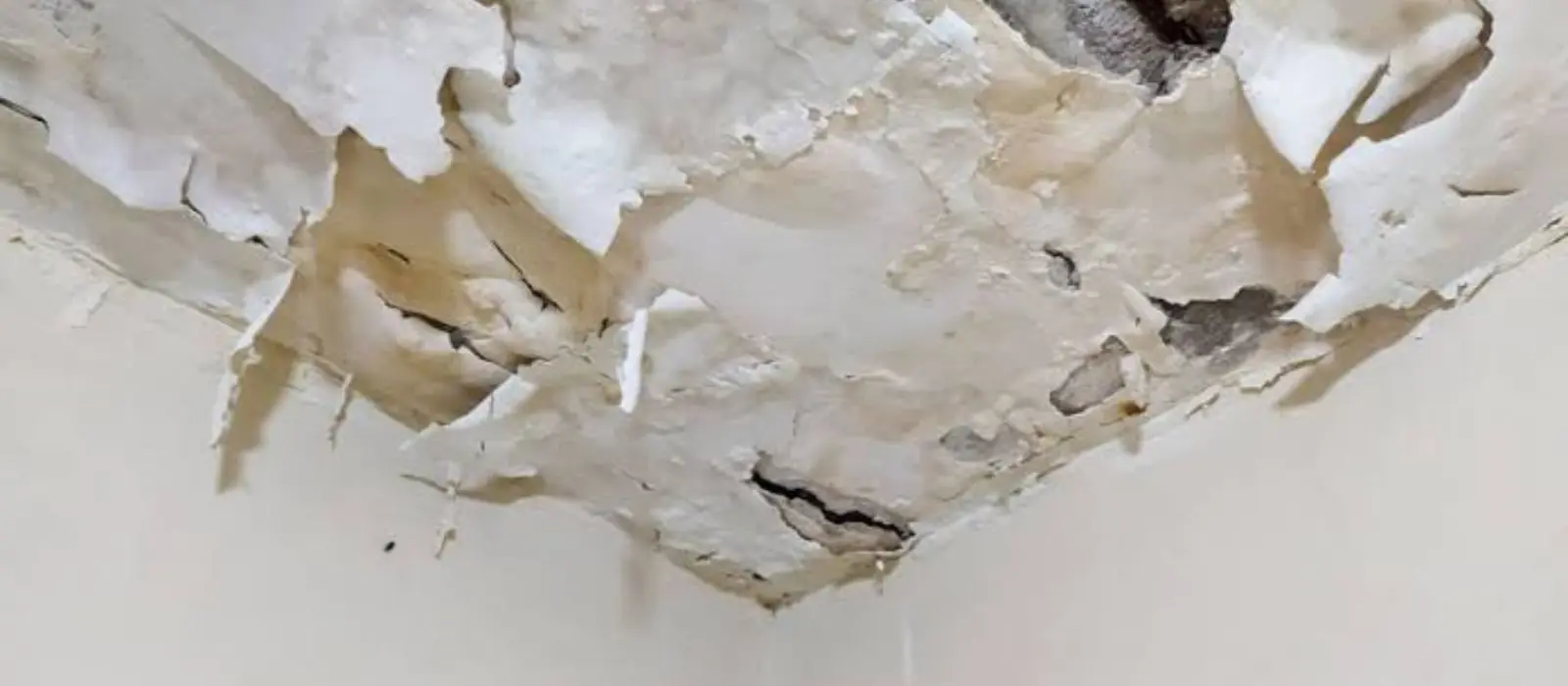
Why the order of the work decides how long the repair lasts
Every durable ceiling repair follows the same six moves: dry, remove, insulate, patch, prime, paint. Swap two of them and the repair fails. Patch before the cavity is dry and the new compound traps moisture. Paint before priming and the old stain shows through the new color within days.
The sequence matters more than the finish. A skilled painter cannot rescue a ceiling that was closed over wet insulation, because the problem is behind the surface.
Dry and verify
Fix the source first, then dry the ceiling and the cavity above with airflow, dehumidification and, where needed, openings in the ceiling. Moisture meter readings from the wet area should match readings from a dry part of the same material.
Remove what cannot be saved
Cut out drywall that is soft, sagging or stained through, usually back to the nearest framing member. Remove wet insulation that has compacted or was exposed to contaminated water.
Insulate and close the cavity
Replace insulation to the same type and thickness, and look at the framing, wiring and the underside of the roof deck while the ceiling is open. This is the only time the cavity is easy to inspect.
Patch and finish
Hang new drywall or repair the plaster, tape the seams, apply compound in thin coats and sand between them. Feathering the edges wide keeps the patch from showing under raking light.
Prime and paint
Seal the patch and any old stain with a stain blocking primer, then paint the whole ceiling plane to the nearest corners. Painting only the patch usually leaves a visible halo.
Plaster or drywall: what changes in the repair
Drywall is a gypsum core wrapped in paper. When it gets wet, the paper softens, the board sags and the surface can grow mold if it stays damp. It is cut out in sections and replaced, which is quick once the cavity is dry.
Plaster is a different material. Traditional plaster is applied in coats over wood lath or gypsum lath, and it is heavy, hard and more forgiving of a short wetting. The weak point is the key, the plaster that pushes through the lath gaps to hold the ceiling up.
| Question | Plaster over lath | Drywall |
|---|---|---|
| How it fails when wet | Keys crack and the ceiling can loosen or sag in heavy sections | Paper softens, board bows and the seams can open |
| Can it be saved? | Often, if it is still bonded to the lath and dries fully | Small stained areas can dry, but soft or sagging board is usually replaced |
| Typical repair | Re-secure loose plaster, patch with plaster or a compatible compound, skim coat | Cut out to framing, hang new board, tape, finish |
| What to watch for | Hairline cracks returning if the lath or keys are still moving | Visible seams or a halo if the patch is small and not feathered wide |
| Disturbance concern | Older paint may be involved, so ask the crew how dust is controlled | Dust control still matters when sanding compound |
How to know the ceiling is ready to close
The test is not how the ceiling feels. Dry surfaces can hide wet framing, so a crew takes meter readings in several places and compares them to a known dry area. Ask to see the readings before the cavity is covered, and ask whether the crew works to the ANSI/IICRC S500 standard for water damage.
A simple homeowner check helps too. Wait until the surface has been dry for a few days with the heat on and the source fixed, then look for new color at the edge of the old stain. New color means water is still arriving.
Primer and paint: where repairs quietly fail
Ordinary latex paint does not stop old stain from bleeding through. A stain blocking primer, oil based or shellac based for heavy stains, seals tannins and mineral deposits. Two thin coats beat one thick coat.
Prime the new drywall as well. Fresh joint compound is porous, so unprimed patches soak up paint differently and show as dull rectangles. Painting the full ceiling in one pass, wall to wall, hides the repair.
Need the ceiling dried before the repair starts?
Call the dispatch line and licensed and insured restoration professionals can check moisture in the ceiling and the cavity above. Same-day response when available.
Marblehead note: ask the Building Department about permits
The Town of Marblehead Building Inspection Department, at 7 Widger Road, lists who can receive building permits: licensed contractors with a current CSL and HIC, design professionals licensed in Massachusetts, and homeowners of owner-occupied one and two family dwellings. The same page says that starting work without a required permit costs three times the applicable fee.
The page does not mention repair work, so it does not tell you whether a ceiling repair needs a permit. Call the Building Inspection Department before the work begins and ask, then ask your contractor who would pull any permit that applies. A short call costs less than guessing wrong.
Source: Town of Marblehead, marblehead.org
Which parts are homeowner work
A small, fully dry patch on a drywall ceiling is a reasonable weekend job. Taping, mudding, priming and painting need patience more than tools. Wear eye protection and a dust mask, and keep a vacuum with a fine filter handy.
Hand the job off when the stain is large, the ceiling is plaster with widespread cracking, the cavity has been wet for more than a day or two, or mold is visible. That is when water damage repair and the water mitigation drying that comes before it should be handled by professionals, not improvised.
Cost factors
Area and access
A hallway ceiling is simpler than a stairwell or a vaulted room where scaffolding is needed.
Ceiling material
Plaster work takes more steps and more cure time than a drywall patch.
What is above
Insulation replacement, framing repair or roof work adds scope that sits behind the visible stain.
Water category
Clean supply water is handled differently from contaminated water, which can require removal of more material.
Finish match
Painting a whole ceiling plane costs more than touching up a patch but hides the repair.
Sudden and accidental water damage is often covered by homeowners policies, while gradual leaks often are not, so check your policy and ask your insurer. Call the dispatch line and describe the damage to find out how pricing would work for your property. Our network also serves Beverly and Peabody.
Frequently Asked Questions
How long should a ceiling dry before it is repaired?
There is no calendar answer, because it depends on the material, the amount of water and the airflow. The deciding factor is readings that match a dry reference, not a number of days.
Massachusetts guidance for homeowners says leaks and floods should be dried promptly, so start drying as soon as the source is stopped.
Do I need to replace the insulation above a stained ceiling?
Not always. Insulation that was wetted by clean water briefly and can dry may be kept, while compacted, soaked or contaminated insulation is usually removed.
The ceiling has to be open or the insulation inspected from the attic to know for certain.
Why did my ceiling stain come back after I painted it?
Usually one of two reasons. The area was still damp and the water kept arriving, or the stain was painted with ordinary paint instead of a stain blocking primer.
Find the source again and verify dryness before repainting.
Is it better to patch or replace the whole ceiling?
For drywall, a cut out patch back to framing is normal, and a whole room replacement is rare. For plaster, whole sections may be re-secured or skim coated.
Larger damage or widespread sag tips the decision toward replacing the full section.
Does a ceiling repair in Marblehead need a permit?
The Marblehead Building Inspection Department page on permits does not address repair work, so the answer is not on that page. Call the Building Inspection Department and describe what you plan to do.
Also ask your contractor, because the page lists who may receive permits and notes a three times fee for work started without a required permit.
Can a stain blocking primer fix a wet ceiling?
No. Primer seals a dry stain. It does nothing to the moisture behind it, and it can hide an active leak.
Dry first, repair second, prime third.