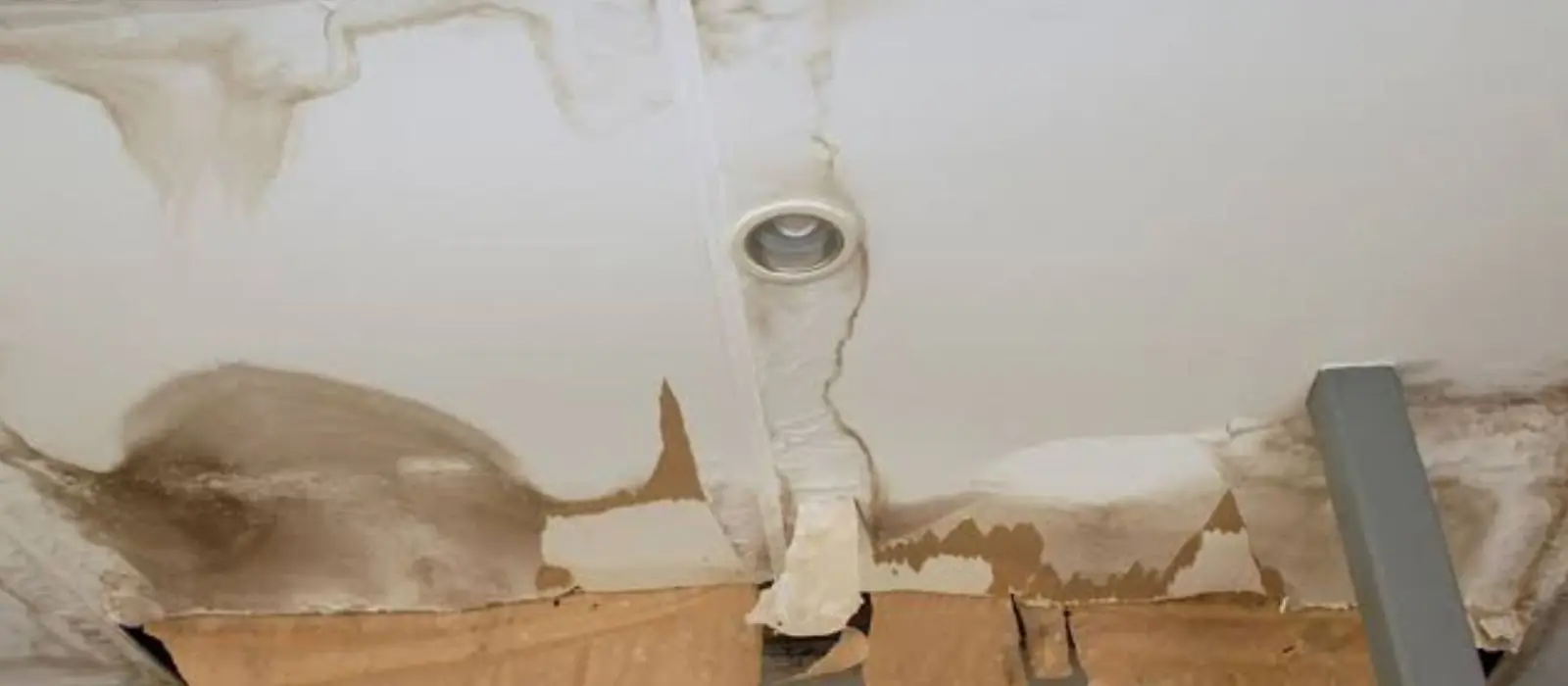
Read the stain before you touch the ceiling
A ceiling stain is a record of how the water arrived. A single pale yellow patch with a cool, damp center usually means recent wetting. Several brown rings with darker edges, like contour lines on a map, mean the spot has gotten wet and dried more than once, so the leak is slow or comes and goes.
Press a clean fingertip near the edge of the stain, not the middle. Cool, spongy or crumbling material means moisture is still in the ceiling. A hard, dry stain suggests the source may have stopped, but it says nothing about whether the insulation or framing above is dry.
Pale yellow or tan, damp to the touch
This is usually a fresh or active leak. Water is still moving through the material, so finding the source is today's job, not next week's.
Brown rings with dark edges
Dust and tannins from framing and insulation travel with the water and settle at the edge each time it dries. Repeated rings point to roof flashing, a weeping pipe joint or condensation.
Gray, green or black speckling
This can be mold growth. Do not scrub or sand it, because that spreads spores. Mold needs moisture to grow, so the water source still has to be found and stopped.
White crust or powder
Mineral residue stays behind when moisture evaporates. It can show up where water has traveled through plaster or around a chimney, so look at what sits above that spot.
Sag, bulge and crack: how urgent is it?
A ceiling that is holding water behaves differently from one that is only stained. A bellied section means water has pooled above the surface, and its weight can pull the material away from the framing. Wet drywall loses strength quickly, and wet plaster can let go in heavy pieces.
Treat any sag as a safety problem first. Stay out from under it and keep children and pets out of the room. A small bulge can be drained by a careful homeowner with a bucket and eye protection, but a large sag, a plaster sag or any bulge near a light fixture is a job for professionals.
Safety note: water, wiring and weight
If water is dripping from or near a light fixture, turn off the breaker for that room only if the panel is dry and you can reach it without standing in water. If you cannot, call 911 or the electric utility before you call the restoration line. Never stand a ladder under a sagging section or push on it with your hands.
Hunting the source: match the pattern to the cause
Water rarely drops straight down. It runs along joists, pipes and wiring until it finds a seam or a nail hole, so the stain can sit several feet from the real opening. Start with timing: does the stain appear only during or after rain, only when someone runs a fixture, or in every kind of weather?
| What you see | Likely source | First check |
|---|---|---|
| Stain appears during or right after rain | Roof, flashing, chimney or window above | Look at the underside of the roof deck in the attic with a flashlight, then at exterior flashing from the ground |
| Stain under a bathroom or kitchen that grows when fixtures run | Supply line, drain, tub or shower pan above | Run one fixture at a time and see which one makes the stain grow |
| Steady growth in dry weather | Pressurized supply or heating pipe | Check the water meter with every fixture off. If it moves, shut the main valve and call a plumber |
| Rings near an exterior wall or vent in winter | Condensation or an ice dam | Look for frost or wet insulation in the attic and check where bath fans vent |
| Wet spot below an upstairs window | Failed sealant, trim or siding | Inspect caulk and trim after wind driven rain |
Condensation and ice: the leaks that have no pipe
Warm, humid air from showers and cooking rises into the attic through gaps around recessed lights, the attic hatch and bath fan ducts. When it meets cold roof sheathing, it condenses and drips onto the insulation. On a cold morning you may see frost on the underside of the roof deck, and when it melts on a mild afternoon it looks exactly like a roof leak.
Ice dams work differently. Heat escaping from the living space melts snow on the roof, the meltwater refreezes at the cold eave, and later water backs up under the shingles. A stain along an exterior wall after a thaw fits that pattern.
One clue helps tell these apart. A roof leak tends to follow a line from a single opening, while condensation wets a wide area of insulation. Fixing condensation means air sealing, ventilation and a bath fan that exhausts outdoors, not just patching plaster.
Stain growing or ceiling feeling wet?
Our dispatch line can send licensed and insured restoration professionals to check the ceiling and the cavity above for moisture. Same-day response when available.
Marblehead note: older homes and plaster ceilings
Wikipedia describes Old Town as largely protected by the Marblehead Historic District, and many Marblehead homes are older. That is a general statement and not a survey of your street, so check your own house. Look in the attic or a closet for strips of wood lath behind the ceiling, because plaster over lath holds water longer than drywall and can crack or flake before a stain appears.
The practical result is simple. In an older house, a hairline crack or a faint tint deserves a look at the space above it, not a quick repaint, because the plaster may be hiding a wet cavity.
Source: Wikipedia (general reference), en.wikipedia.org
What to record and what to leave alone
Photograph the stain with a date, then trace its edge in pencil and write the date beside it. If the line moves, the leak is active. Keep a short log of rain, showers and heating changes, because the pattern often reveals the cause faster than guessing.
Sudden and accidental water damage is often covered by a homeowners policy, while gradual leaks and neglect often are not, so check your policy and ask your insurer. A dated record of when the stain appeared and what you did helps that conversation.
Do not paint over a wet stain. Ordinary paint hides the color but traps moisture and delays the discovery of a bigger problem. Do not cut large openings in plaster yourself either. Once the ceiling is wet, water damage repair starts with locating moisture, and water mitigation covers the drying work that has to finish before any patching.
Our dispatch also covers Swampscott and Salem if the house you are checking is just over the line.
Frequently Asked Questions
Is a brown ring on the ceiling always a roof leak?
No. Rings form wherever water repeatedly wets the ceiling, so a roof is only one candidate. Plumbing above, a bath fan venting into the attic and winter condensation all leave the same ring.
Timing is the best tell. Rings that show up only after rain favor the roof, while rings under a bathroom favor plumbing.
Can a water stained ceiling collapse?
It can. A ceiling holding pooled water carries extra weight, and wet drywall or plaster loses strength and bond to the framing. A sag, a crack that widens or a spot that feels soft are warning signs.
Keep people out of the room under the sag and call for help rather than testing it.
If the stain has dried, is the problem over?
Not necessarily. A dry surface can sit over damp insulation or framing, and a ring that has grown across several rain events tells you the source is still active.
Check the stain edge with a pencil mark over a few weeks and have the cavity above looked at if it moves.
Can I just paint over a ceiling water stain?
Only after the area is verified dry and the source is stopped. Painting a wet ceiling traps moisture, and the stain usually bleeds through ordinary paint within days.
If the source is fixed and the ceiling is dry, a stain blocking primer comes before the finish coat.
Do plaster ceilings in older Marblehead homes react differently to leaks than drywall?
They can. Plaster over wood lath is thick, so it absorbs and holds water longer, and it tends to show cracks, flaking or a sag in heavy pieces. Drywall usually shows a brown stain and soft paper.
Because many Marblehead homes are older, confirm what your ceiling is made of before anyone cuts into it, and ask the crew how they plan to dry the lath and cavity.
Who should I call first: a roofer, a plumber or a restoration company?
Call a plumber if the water runs when no one is using fixtures, and a roofer if it follows rain. If the ceiling is already wet, sagging or dripping, call the restoration line too, because drying cannot wait for repairs to be scheduled.
Stopping the source and drying the building are separate jobs, and both matter.